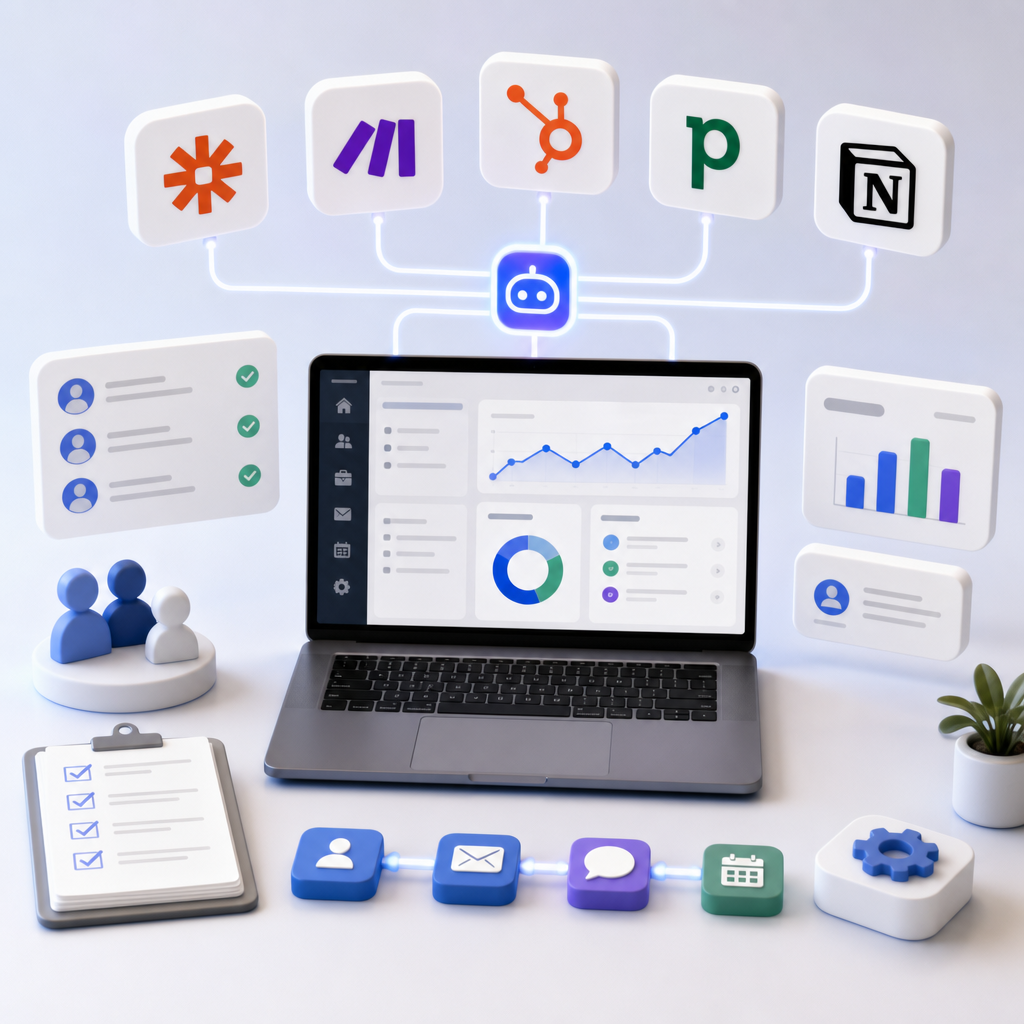
Author: Brandownit

  • Agentic Workflows: How AI Automation Transforms Lead Generation at Scale

    Agentic Workflows: How AI Automation Transforms Lead Generation at Scale

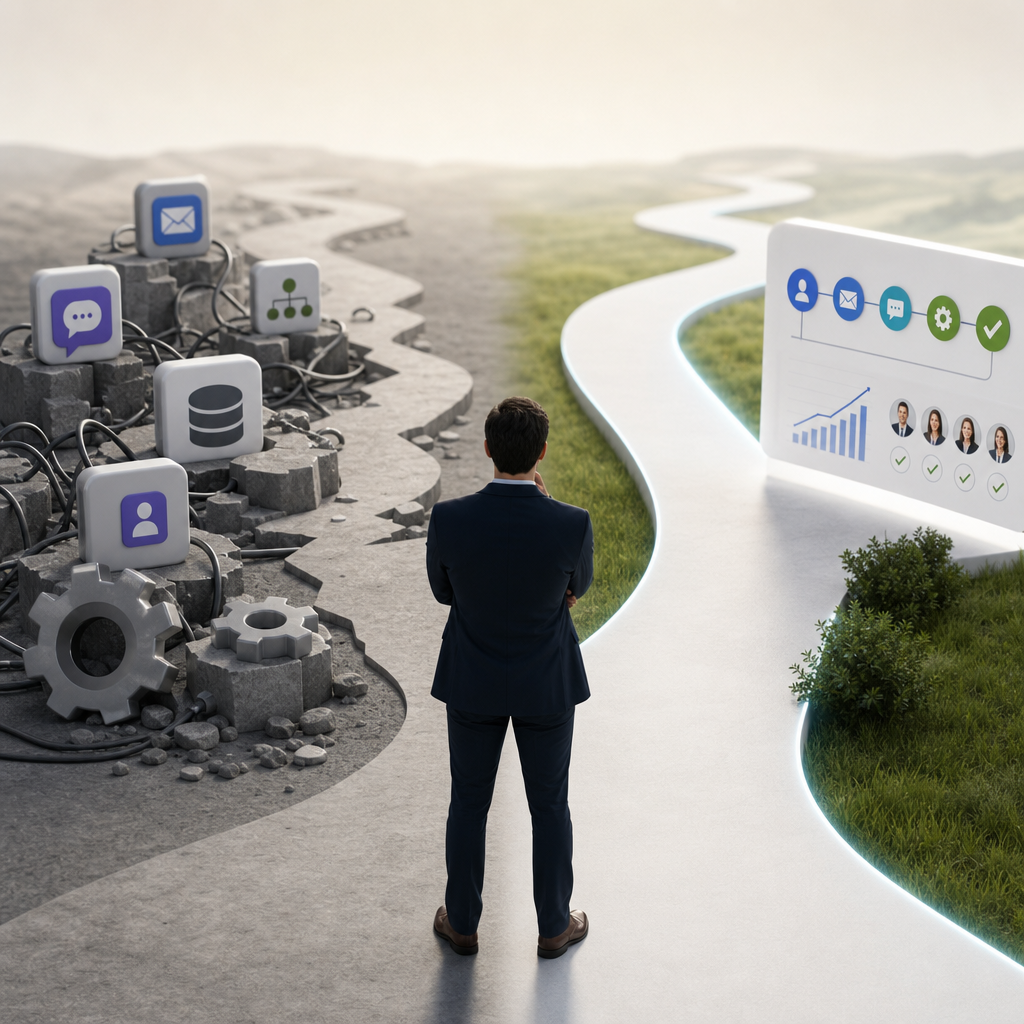
    Why Manual Lead Generation Fails Growing Teams

    Your sales team spends 15 hours per week on outreach that produces maybe two qualified leads. Your founder is still making calls. Your CRM sits half-full because nobody has time to keep it updated. Sound familiar?

    Manual lead generation doesn’t scale. As your business grows from $2M to $10M ARR, the math breaks down fast. You can’t hire enough people to match the growth rate, and even if you could, human-led prospecting is inherently inconsistent. One sales rep takes vacation, closes a deal, or leaves the company, and your pipeline suffers immediately.

    The deeper problem: manual processes create bottlenecks that prevent your team from focusing on what they actually win revenue from. Instead of having conversations that close deals, your operators spend time on data entry, list building, and repetitive outreach sequences. That’s not a sales strategy. That’s administrative overhead wearing a sales hat.

    What you need is a system that works 24/7 without fatigue, maintains consistency regardless of team changes, and frees your people to do what humans do best: build relationships and close deals.

    What Agentic Workflows Actually Do (And Why They Matter)

    Agentic workflows are autonomous systems powered by AI that execute multi-step business processes without human intervention. Unlike traditional automation (which follows fixed rules), agentic workflows use AI to make decisions, adapt to responses, and pursue objectives intelligently.

    Here’s what makes them different from a standard autoresponder or email sequence:

    An agentic workflow watches for signals in real time (a prospect opens an email, visits your website, engages with content), evaluates fit based on your criteria, and decides the next best action. It researches prospects, crafts personalized outreach, handles objections through conversation, and even schedules follow-ups based on engagement patterns.

    The key value isn’t just speed. It’s intelligence. Your AI agent learns which messaging resonates, which industries convert fastest, and which timing produces replies. It adjusts continuously, meaning your lead flow improves without you rewriting sequences every quarter.

    For a scaling business owner, this solves a critical problem: you get the consistency and volume of a sales development team without the hiring, training, and turnover costs. Your lead flow becomes predictable. Your CRM stays clean. And your actual sales team gets warm, relevant conversations instead of cold lists.

    How Our AI Agents Generate Qualified Leads Without Ad Spend

    Our approach relies on intelligent prospecting, not paid campaigns. That distinction matters because it means your lead cost stays fixed regardless of market conditions or platform algorithm changes.

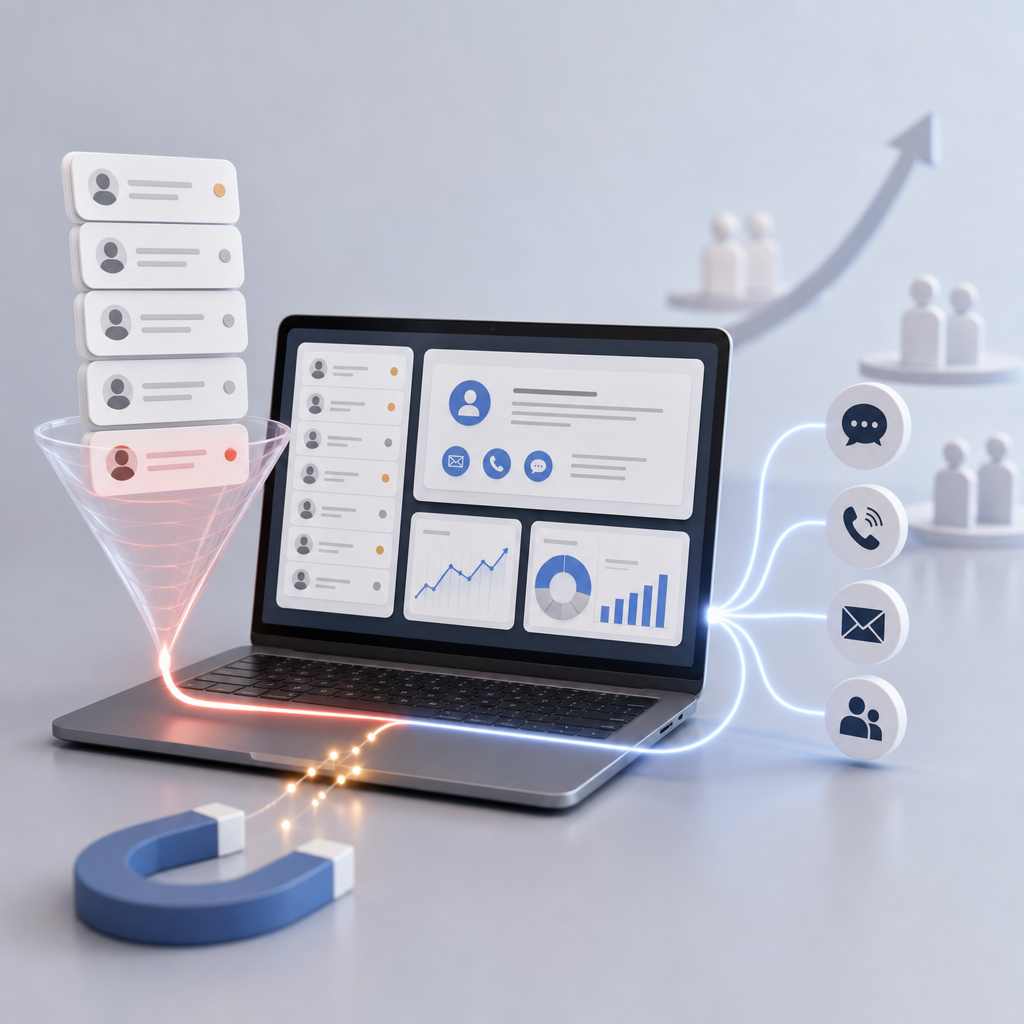
    Here’s the mechanism: we deploy AI bots that identify and engage prospects across multiple channels simultaneously. The agent researches your ideal customer profile (industry, company size, revenue range, hiring signals), builds targeted lists, and initiates outreach through email, LinkedIn, and website channels. When someone responds, the agent qualifies them in real time and routes warm leads directly to your sales team.

    The qualification happens through conversation. Rather than a simple form submission, our AI asks clarifying questions, uncovers budget and timeline, and assesses fit against your actual criteria. By the time a lead reaches your team, they’ve already confirmed they have a problem, they’re considering solutions, and they have authority.

    That’s why we guarantee 10+ qualified leads in 30 days. We’re not counting impressions or clicks. We’re counting conversations with real decision-makers who match your profile.

    The best part: no ad spend required. Your lead cost depends entirely on the value of the time your team would spend prospecting manually. Since our agents work continuously, you’re replacing months of sporadic outreach with consistent, intelligent engagement.

    Building Your First Workflow: Automated Outreach to Lead Reactivation

    Most teams start with one of two workflows: acquiring net new prospects or reactivating dormant opportunities.

    We recommend starting with reactivation because the conversion rate is highest. You already know these people are a good fit (they’ve been a customer or engaged previously). Your AI agent simply needs to remind them why they were interested and surface new reasons to reconnect.

    The workflow structure is straightforward:

    1. Pull your dormant list (opportunities marked inactive in the last 6-12 months)
    2. Define your reactivation objective (schedule a call, confirm current situation, introduce a new product)
    3. Configure the AI agent with context about your relationship history and current offer
    4. Set engagement rules (how often to reach out, which channels to use, when to escalate to your team)
    5. Let the system run while you monitor results

    For net new prospecting, the process is similar but requires research upfront. You define your ideal customer profile in detail, and the agent builds its own list using industry signals, hiring patterns, and technographic data. From there, it follows the same intelligent outreach and qualification process.

    Most teams see their first qualified conversations within 7-10 days of setup. The key is being specific about who you want to reach. Vague ICP definitions produce vague results.

    The Real ROI: Leads, Time Saved, and Revenue Impact

    Let’s attach numbers to this. A typical scaling business spends 60-100 hours per month on manual prospecting across their team. At even $50/hour loaded cost, that’s $3,000 to $5,000 monthly in labor devoted entirely to list building and outreach touching.

    Our agentic workflows cost a fraction of that while typically producing 2-3x the qualified conversations. That’s a direct cost savings plus a revenue multiplier.

    But the real ROI comes from time liberation. When your team isn’t drowning in outreach administration, they close more deals. We typically see:

    • 15-20 qualified conversations per month (vs. 4-6 from manual effort)
    • 3-5 closed deals within 90 days (depending on your sales cycle)
    • 30-40 hours of team time freed for closing activities
    • Sales cycle compression (warmer leads close 20-30% faster)

    If your average deal value is $25,000, and you close 3-5 additional deals in the first quarter, that’s $75,000-$125,000 in incremental revenue. Your total implementation cost typically pays for itself in the first month.

    Scaling Beyond Founder-Led Sales with Agent-Powered Systems

    Most scaling businesses reach an inflection point where the founder can no longer be the primary revenue driver. Yet many try anyway, burning themselves out and creating a hard ceiling on growth.

    Agentic workflows solve this by replacing founder dependency with systematic intelligence. Instead of the founder making calls and managing the pipeline, the system qualifies leads and surfaces only the conversations worth having.

    This doesn’t mean removing the founder from sales. It means repositioning them from prospector to closer. They focus on negotiations, relationship deepening, and deal strategy instead of dialing, following up, and list building.

    At scale, this also creates institutional knowledge. Your system learns which messaging, which industries, and which personas convert fastest. That intelligence compounds over time. When you eventually build a sales team, they inherit a battle-tested system rather than starting from scratch.

    Implementation: From Setup to Your First 15 Leads in 30 Days

    We typically structure implementation in three phases across 30 days.

    Week 1: Discovery and Configuration We audit your existing data, define your ideal customer profile with precision, and configure the AI agents with your unique value messaging. This phase also includes integrating your CRM and setting up lead routing so qualified prospects flow directly to your sales team without manual data entry.

    Week 2-3: Deployment and Testing The agents go live and begin prospecting. We monitor early conversations, refine targeting based on response patterns, and adjust messaging if needed. This is when you’ll see your first meaningful responses and we can confirm the system is calibrating correctly.

    Week 4: Scaling and Optimization By now, we have data on what’s working. We widen targeting slightly, test additional messaging variations, and ensure your team has everything they need to handle the inbound flow. Most teams see 10-15 qualified leads by day 30, with momentum building into month two.

    The reason this timeline works is because we’re not starting from zero. We’re leveraging your existing data, your best customer insights, and proven prospecting frameworks. The agents learn as they go, so results typically accelerate week-over-week.

    Common Mistakes Teams Make With AI Workflows

    We’ve implemented hundreds of these systems, and patterns emerge around what derails execution.

    Vague targeting: Teams try to make the system work for everyone and end up reaching nobody effectively. Your ICP needs to be specific. Industry, company size, revenue range, hiring signals, technology stack—specificity increases conversion rates by 40-60%.

    Misaligned qualification: Some teams set qualification bars too high (expecting the AI to close deals) or too low (routing every response regardless of fit). We recommend aiming for conversations with decision-makers who acknowledge a problem and have a timeline. That’s your sweet spot.

    Ignoring data cadence: Workflows need monitoring. Not obsessive daily checking, but weekly reviews to see what messaging resonates, which segments convert fastest, and where to adjust. Teams that treat setup-and-forget underperform consistently.

    Expecting instant pipeline: Prospecting still follows a pipeline, just a faster one. Qualified leads in week one are great. Expect closeable deals in 60-90 days depending on your sales cycle. Patience here prevents abandonment.

    The teams that win allocate time upfront for precision definition and then trust the system to execute while they focus on conversion.

    How Our Platform Consolidates Tools and Eliminates Friction

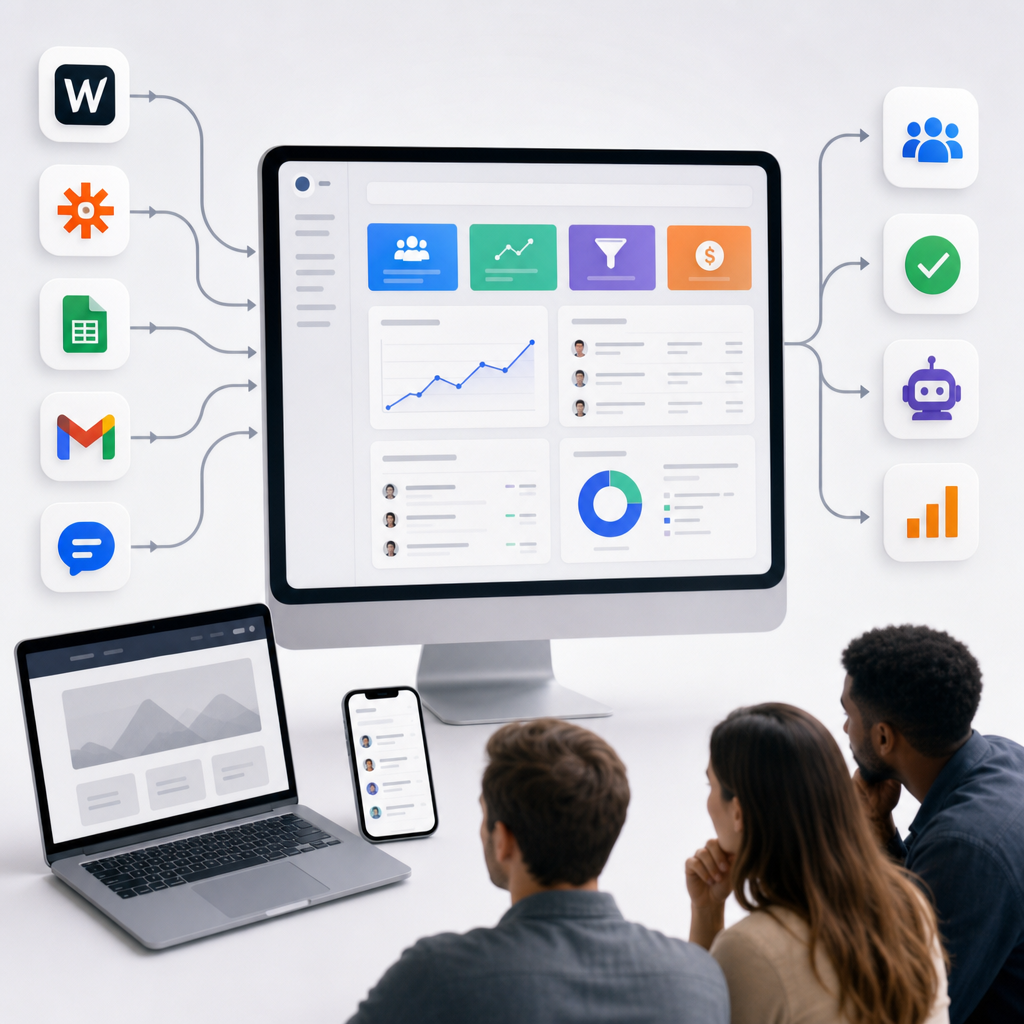
    Most scaling teams use 8-15 different tools. Email, CRM, lead generation, scheduling, analytics, data cleanup. They don’t talk to each other. Data flows manually between systems, creating errors and delays.

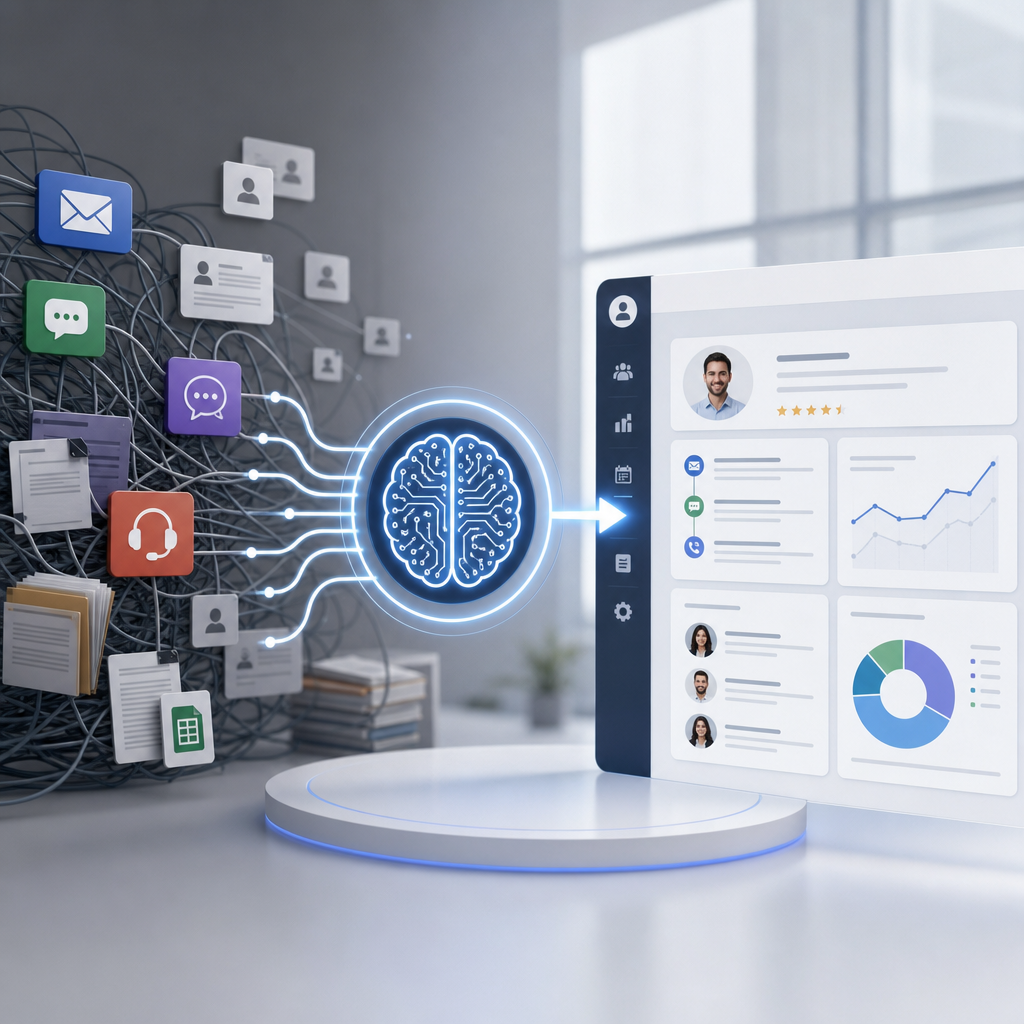
    We consolidated this. Our platform unifies prospecting, qualification, CRM integration, and analytics dashboard reporting into a single environment. When an AI agent qualifies a lead, it automatically creates the contact, logs conversations, sets follow-up tasks, and reports on pipeline impact. Zero manual data entry.

    Your team sees clean, warm leads in your CRM with full engagement history already recorded. They don’t need a separate system to understand what the prospect cares about or what they’ve already said yes to.

    This consolidation typically saves 5-10 hours per week in tool management and data wrangling alone. More importantly, it eliminates the information loss that happens when data passes through multiple systems.

    Results You Can Expect Within Your First Quarter

    By day 90, most businesses using our agentic workflows show measurable change:

    • 40-60 qualified conversations with actual decision-makers
    • 5-8 closed deals (depending on sales cycle and deal size)
    • Predictable monthly lead flow replacing sporadic sourcing
    • Sales team spending 70% of their time closing instead of prospecting
    • CRM hygiene improvement (clean data, complete history, accurate forecasting)

    For a $5M business, this typically translates to $150,000-$300,000 in incremental revenue within 90 days. For larger businesses, the multiplier is often higher.

    Beyond revenue, teams report reduced founder burnout, faster sales cycles, and a repeatable system that survives team changes. Growth becomes less dependent on one person’s work ethic.

    The businesses that see the best results are those that treat agentic workflows as a system to optimize, not a set-it-and-forget-it tool. Weekly monitoring and monthly adjustments compound over time, turning a good system into a great one.

    Ready to replace manual prospecting with intelligent automation? Start with your dormant list. It’s the fastest path to proving ROI, and within 30 days you’ll have evidence of what’s possible when leads flow consistently without your team’s constant effort.

  • Lead Generation Automation Agencies: Why We Stand Apart from Competitors

    Lead Generation Automation Agencies: Why We Stand Apart from Competitors

    The Lead Generation Automation Problem Most Agencies Miss

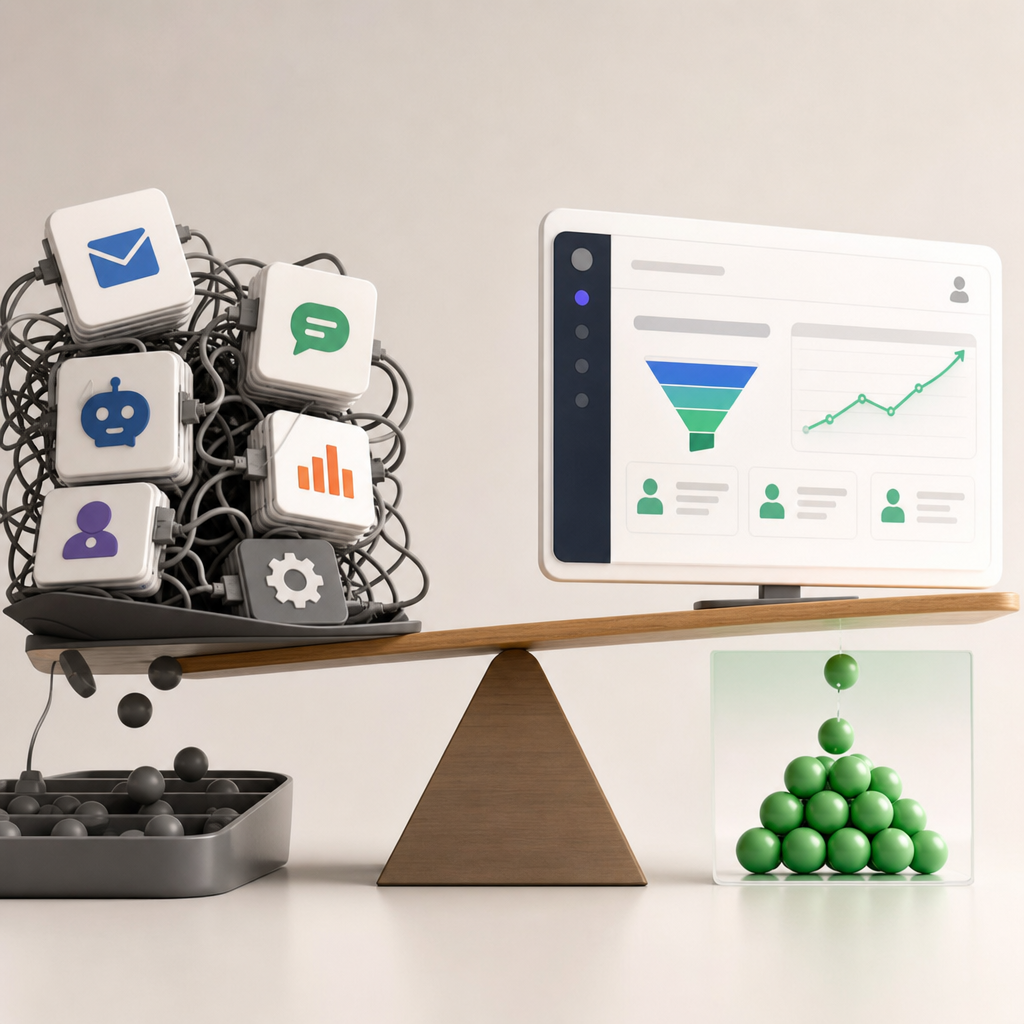
    Most lead generation automation agencies focus on the wrong metric: tools deployed rather than results delivered. They sell you a platform, layer on another tool for email, add a separate chatbot solution, and leave you with a fragmented stack that requires constant manual orchestration. After six months, you’re managing integrations instead of closing deals.

    The core problem we see across SMBs is this: agencies promise automation, but they rarely automate the entire customer acquisition process. They automate outreach but not lead qualification. They automate follow-up but not dormant account reactivation. They hand you a dashboard and assume you’ll extract meaning from disconnected data points.

    What actually matters to scaling operators is clarity: which leads are ready to buy, what’s the fastest path to qualified conversations, and how do we do this without burning cash on ads or hiring additional team members. When an agency can’t answer these questions with specificity, you end up paying for complexity instead of growth.

    What Sets Our Approach Apart: Results-First, Not Tool-Heavy

    We built BRANDOWNIT around a single principle: guarantee qualified leads first, sell software second. That changes how we think about every feature, every integration, and every customer conversation.

    Our platform consolidates what used to require five separate subscriptions into one unified system. Automated outreach, AI voice and chat agents, dormant lead reactivation, referral engine automation, and a real-time growth dashboard all work together from day one. You’re not gluing together Zapier workflows; you’re operating a growth engine built specifically for predictable customer acquisition.

    We also think differently about your time. Rather than handing you another tool to learn, we embed intelligence into the system itself. Our AI learns from your successful conversations, automatically adjusts outreach cadences based on response patterns, and surfaces the leads most likely to convert without you needing to analyze spreadsheets.

    This is why 300+ businesses have consolidated their growth stacks into our platform. They’re not chasing the newest feature; they’re choosing outcome certainty over feature quantity.

    Comparison 1: Guaranteed Results vs. Vague Promises

    Most agencies promise “top-tier lead generation” or “quality automation” without committing to outcomes. It’s a safe positioning because vague promises are hard to measure.

    We guarantee 15+ qualified leads in 30 days. If we don’t deliver, you don’t pay. This single commitment forces us to be ruthlessly disciplined about what works and what doesn’t. We can’t afford to sell you a tool and hope it performs; we have skin in the game, which means we design every workflow, every outreach sequence, and every AI agent interaction with your specific metrics in mind.

    When you work with other automation agencies, the onus is on you to prove the system works. You’re expected to optimize your own outreach lists, craft your own messaging frameworks, and troubleshoot integration issues. When something doesn’t land, they offer more features. When you work with us, the inverse is true: if the system doesn’t deliver, we adjust it until it does. That’s a fundamentally different partnership model.

    The guarantee also filters for the right fit. We turn away businesses where the fundamental market opportunity is too small or the product-market fit isn’t there. That’s not how traditional agencies operate; they’re rewarded for signing more clients regardless of likelihood to succeed. We’re rewarded for ensuring you succeed.

    Comparison 2: All-in-One Platform vs. Fragmented Tool Stack

    The industry standard approach is to recommend best-in-class point solutions: this CRM for data, that platform for email, another tool for chatbots, a fourth for referral tracking. Theoretically sound; practically a nightmare.

    Here’s what usually happens: data doesn’t sync correctly between systems, your team spends 20% of time on manual data entry to keep everything aligned, and when something breaks, you’re navigating support tickets across three different vendors. You’ve bought automation to save time and ended up burning more of it managing infrastructure.

    Our platform eliminates this pattern entirely. Everything lives in one system, data flows seamlessly between modules, and your team operates from a single source of truth. When a lead comes in through cold outreach, gets engaged by an AI voice agent, and enters your sales pipeline, that entire journey is tracked in one place. No context switching. No sync delays. No friction.

    The business impact is straightforward: reduced operational overhead, faster team onboarding, and less time spent troubleshooting integrations. Over a year, that compounds into significant cost savings and productivity gains.

    Comparison 3: Speed to ROI and Transparent Pricing

    Agencies often bury pricing in consultation calls, which means you don’t know the true cost until you’re deep in a sales conversation. They also front-load implementation timelines; you’re looking at 90-120 days before seeing real results. By then, you’ve already spent $15,000-$30,000 with nothing to show.

    We operate on a different model. Pricing starts at $299/month with full transparency. You know exactly what you’re paying before you onboard. Implementation happens in days, not months. Most clients see their first qualified leads within the first two weeks because we start moving immediately, not planning endlessly.

    The guarantee creates genuine ROI accountability. You’re not paying for months of setup or crossing your fingers that the system will eventually work. You’re paying for results. If 30 days passes and you haven’t hit 15+ qualified leads, the cost resets and we keep working until we do.

    Why Our Clients Replace Multiple Vendors with One Solution

    The pattern is consistent: businesses come to us after having invested in three to five different platforms. They’ve got HubSpot for CRM, Mailchimp for email, Chatbase for chatbots, Airtable for tracking, and a freelancer on Upwork for cold calling scripts. The total spend is often $2,000-$4,000 per month, the integrations are brittle, and nobody owns the outcomes.

    When they consolidate into our platform, several things shift immediately. First, overhead drops 40-60% because they’re not paying for five subscriptions anymore. Second, lead quality improves because the system is designed to prioritize qualified conversations over volume. Third, team velocity increases because they’re working in one system, not toggling between five apps.

    But the real reason they stay is psychological: they want to work with a partner, not a vendor. They want someone who’s invested in their growth, who understands their specific customer acquisition challenge, and who’ll iterate until it works. That’s the difference between buying software and building a growth engine.

    The Real Cost of Choosing the Wrong Automation Partner

    Picking an automation agency that doesn’t guarantee results has a compound cost that most teams don’t quantify until it’s too late.

    You lose three to six months to implementation and learning curve. During that time, your leads aren’t flowing. Your sales team is underutilized. Your competitors who moved faster are already capturing market share.

    You’re also trapped in a commitment trap. You’ve built your processes around their platform, trained your team on their workflows, and integrated them with your CRM. Walking away becomes friction-heavy, which means you tolerate underperformance longer than you should.

    Then there’s the organizational cost. When automation doesn’t work, teams revert to manual processes. You end up maintaining the old system while trying to make the new one work, which doubles operational load and creates cynicism about automation itself.

    The financial impact is concrete: a three-person team losing one qualified lead per week due to poor automation infrastructure is leaving roughly $50,000-$150,000 in annual revenue on the table, depending on deal size. Over two years, that’s a quarter million dollars of missed opportunity.

    How We Deliver 15+ Qualified Leads in 30 Days

    The guarantee isn’t magic; it’s engineering. Here’s how we actually do it.

    First, we start with your existing data. Most businesses have dormant leads, past prospects, and customer referral networks that haven’t been systematically activated. Our lead reactivation workflows automatically re-engage these contacts with personalized sequences. You’re often recovering 30-40% of that list into active conversations within the first 30 days.

    Second, we deploy automated outreach to your target prospect list. Our AI-powered systems craft personalized cold outreach based on your industry, offer, and past conversions. But unlike generic cold email tools, we’re monitoring response patterns in real-time and adjusting cadence and messaging continuously.

    Third, we deploy AI chat and voice agents to handle initial qualification. When someone responds to your outreach, they’re immediately engaged by an intelligent agent that qualifies them, books them into a pipeline, and hands off to your team only when there’s genuine intent. This eliminates the “wait for your sales team to get back to them” gap that kills conversion rates.

    Fourth, we activate your referral engine. Many businesses have satisfied customers and strategic partners willing to refer but lack a systematic process to ask. Our automation makes referral requesting and tracking frictionless; you’re essentially activating a dormant sales channel that costs you nothing to scale.

    The combination of these four channels consistently delivers 15+ qualified leads in the first 30 days. We then refine based on your conversion patterns so that what we’re delivering are the most qualified leads, not just volume.

    Our Social Proof: 300+ Businesses, $18M+ in Revenue Created

    Numbers matter when you’re evaluating partners. Over the past few years, we’ve worked with 300+ businesses ranging from solopreneurs to mid-market operators. The aggregate impact is substantial: $18M+ in revenue created for our clients and 32,000+ hours of admin time saved through automation.

    That second metric is equally important. When you consolidate five platforms into one, when your team stops manually managing integrations, when AI agents handle 70% of initial prospect qualification, the cumulative time savings are genuine. For a lean team, that’s equivalent to hiring an additional full-time operator without the salary cost.

    The diversity of our customer base also matters. We’ve helped SaaS founders scale to Series A, consulting firms systematize their lead pipeline, and service-based businesses build predictable customer acquisition systems. The underlying principle is constant: consolidate complexity, automate qualification, guarantee results.

    Why DIY Automation Tools Fall Short for Growing Teams

    You can absolutely set up Zapier workflows, configure a Chatbase bot, and hire a VA to manage cold outreach sequences. Many teams do. What they discover over three to six months is that DIY automation creates its own operational burden.

    Someone on your team becomes the system admin, constantly troubleshooting why data didn’t sync, why the chatbot responded incorrectly, or why outreach sequences didn’t trigger. That person is usually your most technical team member, which means they’re pulled away from core business work.

    The other issue is consistency. When automation is fragmented across multiple platforms, it’s difficult to maintain messaging consistency, offer consistency, or timing consistency. You end up with disjointed customer experiences that reduce conversion rates. A prospect might get four emails in one week from different sequences, then radio silence for two weeks. That’s not automation; that’s chaos with a dashboard.

    DIY automation also means you’re missing the domain expertise that comes with a purpose-built system. We’ve refined our outreach frameworks, qualification criteria, and follow-up sequences based on thousands of customer interactions. You’re starting from scratch with a blank Zapier canvas.

    The financial case is straightforward: a full-time team member managing DIY automation costs you $50,000+ annually. Our platform at $299/month is $3,600 per year. Even if you need the equivalent of one quarter-time person to maintain DIY systems, our platform is ten times more cost-effective.

    The BRANDOWNIT Difference: From Founder-Led to Scalable Growth

    We built BRANDOWNIT because we experienced this problem ourselves. As founders, we were managing customer acquisition manually: responding to inbound messages, qualifying leads, coordinating follow-up, nurturing cold prospects. It was the highest-leverage work we did, and it was completely unscalable.

    So we built a system to automate what we learned. That founder lens never left our product. We don’t build features for large enterprises or complex Fortune 500 scenarios. We build for operators running lean, managing multiple revenue channels, and needing results without bureaucracy.

    This shows up in how we think about onboarding. We get you live in days because we know every day without automated lead flow is a day you’re leaving revenue on the table. It shows up in how we think about pricing. We don’t have enterprise tiers with 18-month contracts because we know SMBs need flexibility. It shows up in our guarantee because we know the only thing that matters is whether qualified leads actually flow into your pipeline.

    The difference is philosophical: we’re not building software to be sold; we’re building a growth engine to be used. That distinction changes everything about product decisions, customer support, and how we measure success.

    Making Your Decision: Your Path to Predictable Lead Flow

    If you’re evaluating lead generation automation agencies, you have two paths.

    You can continue shopping point solutions, spending $2,000-$4,000 monthly on fragmented platforms, dedicating team resources to integration management, and hoping that eventually the system performs. Most businesses do this. Most regret it after six months.

    Or you can consolidate into a platform designed specifically for what you’re trying to achieve: predictable, scalable customer acquisition without ad spend dependency or oversized team overhead. You get guaranteed results, transparent pricing, rapid implementation, and a partner invested in your growth.

    Start by testing one of our free tools if you want to experience the philosophy first: use our Lead Magnet Idea Generator or Cold Email Craft for SMBs to see how we approach customer acquisition differently. If that resonates, our platform operates on the same principles at scale.

    For most businesses running lean, the choice is clear: stop maintaining five platforms and start running one growth engine. That’s what we’ve built. That’s why 300+ businesses have consolidated into our system, why we’ve created $18M+ in client revenue, and why we can guarantee 15+ qualified leads in 30 days.

    Your predictable lead flow is one decision away. Let’s build it together.

    For further reading: AI Bots.

  • AI Workflow Automation vs Manual Processes: Why Smart Businesses Choose Automation

    AI Workflow Automation vs Manual Processes: Why Smart Businesses Choose Automation

    The Hidden Cost of Manual Workflows: Why Status Quo Fails Scaling Businesses

    Every hour your team spends on repetitive, manual tasks is an hour they’re not selling, building, or strategizing. Yet most businesses running on manual workflows don’t measure this cost until it’s too late.

    Consider what happens when your sales team manually inputs leads into a spreadsheet, follows up via email threads, and tracks pipeline status across three different tools. One lead takes 15 minutes to capture, qualify, and log. Multiply that by 50 leads per month, and you’re looking at 750 minutes (12.5 hours) spent on pure data entry. That’s roughly 2.5 days per month of productive selling time, gone.

    The real damage isn’t just lost hours. It’s compounded:

    • Human error multiplies: Duplicate entries, missed follow-ups, incomplete data kill conversion rates.
    • Inconsistency destroys growth: Without a standardized process, outcomes vary wildly month to month.
    • Scaling becomes painful: Hiring more people to do manual work doesn’t fix the problem; it multiplies the coordination overhead.
    • Decision-making suffers: You can’t see patterns or opportunities when data lives in silos.

    Most scaling businesses hit this wall around $2M-$5M in revenue. Manual workflows that worked for a founder-led team become a bottleneck. Adding headcount feels necessary but crushes margins. And without clarity on what’s actually working, you can’t optimize anything.

    The cost isn’t what you spend on manual labor; it’s the revenue you leave on the table and the growth you sacrifice.

    What We Mean by AI Workflow Automation: The Strategic Difference

    AI workflow automation isn’t just about replacing keystrokes. It’s about building intelligence into your business operations so decisions are faster, execution is consistent, and your team focuses on high-value work.

    Here’s the distinction: traditional automation (like basic Zapier workflows) connects tools and triggers actions. AI workflow automation goes further. It understands context, learns from patterns, and makes decisions without human input.

    For example, a traditional automation might say: “If a lead comes in, add them to a spreadsheet.” AI automation says: “If a lead comes in, analyze their profile, check if they match our ideal customer, score their likelihood to convert, assign them to the right team member, and trigger the most effective first outreach based on how similar prospects have responded before.”

    That difference compounds. AI automation doesn’t just save time; it improves outcomes because the process itself is smarter.

    Our approach to AI workflow automation focuses on three core functions:

    1. Lead capture and qualification: AI-driven bots talk to prospects 24/7, qualify them instantly, and hand off warm leads to your team.
    2. Reactivation and nurture: AI identifies dormant contacts in your database and re-engages them with personalized messaging.
    3. Process intelligence: Every workflow learns from results, adapting to what actually converts in your specific business.

    This is what separates AI automation from basic task automation. It’s not just efficient; it’s strategic.

    Comparison 1: Time Investment and Operational Efficiency Gains

    Let’s quantify the difference. A typical SMB operator or small sales team handles lead management, follow-ups, and admin tasks. With manual processes:

    Weekly time breakdown (manual workflows):

    • Lead data entry and CRM updates: 8-10 hours
    • Follow-up email composition and sending: 4-6 hours
    • Lead research and qualification: 5-7 hours
    • Pipeline review and reporting: 2-3 hours
    • Total: 19-26 hours per week on admin

    Weekly time breakdown (with AI workflow automation):

    • AI bots capture, qualify, and pre-score leads automatically: 0 hours (runs 24/7)
    • Personalized outreach triggered automatically based on prospect behavior: 0.5 hours (review and tweaks only)
    • Data synced across all tools in real time: 0 hours
    • Dashboard reports generated automatically: 0.25 hours (review only)
    • Total: 0.75 hours per week on admin

    That’s a 95% reduction in administrative overhead. One person can now handle what previously took 3-4 people, or the same person can focus entirely on closing deals instead of managing data.

    Across a month, that’s roughly 80+ hours reclaimed. Across a year, that’s over 4,000 hours freed up. For reference, our clients have collectively saved 32,000+ hours through automation on our platform.

    The efficiency isn’t theoretical. When your lead flow is consistent, qualification is automatic, and follow-up is personalized but hands-off, your conversion rate improves and your sales cycle compresses.

    Comparison 2: Scalability Without Adding Headcount

    Manual processes don’t scale linearly. They scale chaotically.

    When you double your lead volume, you can’t just hire 0.5 more sales reps. You hire a full person, stretch their capacity, then hire again when you hit the next ceiling. You’re always understaffed or overstaffed. Your cost structure becomes rigid and unpredictable.

    With AI workflow automation, scaling works differently.

    Our platform handles:

    • 50 leads per month or 5,000 leads per month at the same operational cost
    • 24/7 customer support via AI voice and chat bots without additional staffing
    • Lead reactivation from your entire dormant database automatically
    • Referral automation that compounds your growth without manual intervention

    One client grew from 15 to 120 qualified leads per month without adding a single team member. Another automated their entire customer onboarding process, reducing time-to-value by 40%.

    The economic advantage is brutal: your revenue can 3x or 5x while your overhead stays flat. That’s margin improvement that changes the trajectory of a business.

    Manual processes make you hostage to headcount decisions. AI automation lets you grow without that constraint.

    Comparison 3: Cost Per Lead and Revenue Impact

    Manual processes have a hidden cost structure that most businesses never actually calculate.

    Cost per lead (manual approach):

    • Salary cost of sales/admin team conducting outreach: $3,000-$5,000 per month per person
    • Tools and CRM licensing (multiple platforms): $200-$500 per month
    • Time spent per qualified lead (15-30 minutes per lead): ~$100-$200 per lead
    • Follow-up cost (email, calls, proposals): ~$50-$100 per follow-up
    • Average cost per qualified lead: $300-$800

    Cost per lead (AI workflow automation):

    • Platform fee for unlimited automation: $299-$999 per month
    • Scaling from 50 to 500+ leads per month: cost per lead drops to $5-$25
    • Outreach quality often improves due to AI personalization and timing
    • Average cost per qualified lead: $50-$150

    The gap widens at scale. At 100 leads per month, both approaches cost roughly the same. At 500 leads per month, manual processes become economically unsustainable while AI automation becomes absurdly cheap.

    Revenue impact compounds faster. If your average customer value is $10,000 and your conversion rate is 20%, then 100 qualified leads = $200,000 in revenue. With manual processes, that costs you $30k-$80k to acquire. With AI automation, it costs you $1.5k-$3k. The difference is pure margin.

    This is why we guarantee 15+ qualified leads in 30 days without paid ads. When the process itself is efficient, you don’t need to burn cash on advertising to move the needle.

    How Our Platform Consolidates Fragmented Tools Into One Growth Engine

    Most scaling businesses juggle 5-8 different tools: CRM, email platform, calendar sync, lead database, form builder, reporting dashboard, AI chat tool, phone system. Data gets stuck between tools. Context gets lost. Reporting becomes a nightmare.

    We built our platform to replace that fragmentation with a unified system.

    Here’s what happens when you consolidate:

    Single source of truth: Every lead, conversation, and interaction lives in one place. No more “Is that contact in HubSpot or Pipedrive?” No more duplicate data.

    Automated data flow: Information moves between functions without manual handoffs. A lead comes in through your website, gets scored by AI, assigned to the right team member, and added to a nurture sequence automatically.

    24/7 AI agents handling specific functions: Our AI bot development capabilities mean you can deploy customer support bots, sales qualification bots, and lead research bots that work while you sleep.

    Real-time performance visibility: Analytics dashboard services built into the platform show exactly what’s working. How many leads came in? What’s your qualification rate? Which outreach method converts best? All visible in real time.

    Referral and reactivation engines: The platform automatically identifies your best opportunities (cold outreach prospects, dormant customers, referral sources) and sequences them intelligently.

    One platform. No integration headaches. No data silos. No context switching between tools.

    This consolidation cuts your monthly tool spend from $500-$1,500 down to $299-$999, but the real value is operational. Your team spends less time managing tools and more time executing on strategy.

    The BRANDOWNIT Advantage: Results Without Ad Spend Dependency

    Most growth strategies depend on paid advertising. You’re constantly feeding the machine: Google Ads, Facebook Ads, LinkedIn Ads. It works, but it’s expensive and it’s competitive. As CPCs rise, your acquisition cost rises with it.

    We built our platform on a different principle: predictable growth through intelligent outreach, not paid ads.

    Here’s how we think about growth:

    1. Every business has dormant leads in their database: People who showed interest but didn’t buy. AI reactivation turns that into revenue without new customer acquisition cost.
    2. Every business has referral potential: But referrals stay hidden without a system. Our referral engine makes it automatic.
    3. Every business can qualify better: AI can screen 100 leads in the time it takes a human to screen 5. That’s not just efficiency; that’s a different game.
    4. Every team can reach more people: With 24/7 bots handling conversations, outreach can happen while your team sleeps.

    The result: 300+ businesses on our platform have generated $18M+ in revenue without dependency on ad spend.

    That doesn’t mean ads are never useful. It means your growth system shouldn’t break if you pause ad spending. It shouldn’t require constant cash injection to maintain momentum. That’s what fragile growth looks like. Smart growth is systematic.

    We’ve helped entrepreneurs, SMBs, and agencies unlock 15+ qualified leads in 30 days using nothing but intelligent outreach, intelligent reactivation, and intelligent qualification. No paid ads required. No big team required.

    Real Numbers: What Our Clients Achieve in 30 Days

    Here’s what actually happens when a scaling business switches from manual processes to AI workflow automation.

    Lead generation and qualification:

    • Clients report 15+ qualified leads within 30 days (guaranteed)
    • Lead quality increases because AI qualification is consistent
    • Follow-up speed improves from days to minutes

    Time savings:

    • Average reduction of 20-30 hours per week in admin work
    • Sales teams report more time in actual conversations
    • Leads reported 32,000+ total hours saved across the platform

    Cost reduction:

    • Tool consolidation cuts monthly SaaS spend by $300-$800
    • Cost per qualified lead drops 60-75% within first 60 days
    • Payback period is typically 30-45 days

    Revenue impact:

    • Clients close 10-20% more deals from the same pipeline (due to faster follow-up and better qualification)
    • Average customer lifetime value increases because onboarding is automated
    • Repeat business and referrals increase when customers experience smooth, personalized processes

    These aren’t theoretical projections. These are results from clients actively running their businesses on our platform, in 2026, with real data.

    One client in professional services went from 8 qualified leads per month to 50+ qualified leads per month in their first 90 days, entirely through reactivation and intelligent outreach. No paid ads. No additional hires. Just smarter processes.

    Another client in SaaS reduced their sales cycle by 35% because the AI qualification process meant no time was wasted on unqualified prospects. Sales reps only got calls from pre-qualified leads.

    Why Generic Automation Tools Fall Short for Growth-Focused Operators

    Most automation platforms on the market are built for operational efficiency. They’re great at connecting tools and automating tasks. But they’re not built for growth.

    Here’s the gap:

    Generic tools focus on:

    • Task automation (if X, then do Y)
    • Multi-tool integration
    • Workflow visualization
    • Basic reporting

    Growth-focused automation (what we built) focuses on:

    • Lead intelligence and scoring
    • Qualification and prioritization
    • Personalized outreach at scale
    • Revenue impact metrics
    • Conversion optimization

    A generic automation tool might help you save time on CRM data entry. A growth engine helps you acquire more customers while saving time on CRM data entry.

    The other problem: generic tools are designed for IT teams or power users. They require weeks to set up and constant maintenance. Growth-focused operators don’t have time for that. They need something that works out of the box.

    Our platform is built specifically for founders, operators, and SMB teams who care about one thing: more qualified leads, more conversions, more revenue. Not efficiency for efficiency’s sake. Efficiency that drives revenue.

    Most teams trying to use generic automation tools end up abandoning them after a few months because the setup is too complex or the results don’t justify the effort. We’re designed to work differently: you get results in 30 days or we improve it for you.

    Your Next Step: From Inefficiency to Predictable Revenue Growth

    If your business is still running manual lead generation, follow-up, and CRM processes, you’re competing with one hand tied behind your back.

    You don’t need a bigger team. You don’t need to spend more on ads. You need smarter systems that do the work for you.

    Here’s what we recommend:

    Start with a clear audit: Map out all the time your team spends on manual admin work. Track where leads come from, how long qualification takes, and how many deals fall through due to slow follow-up. The numbers will shock you.

    Test the approach: If you want to see AI workflow automation in action before committing to a platform, we’ve built free tools that demonstrate the concept. Try our Lead Magnet Idea Generator or Cold Email Craft for SMBs to see how AI can improve your outreach immediately.

    Get on our platform: The BRANDOWNIT Growth Platform starts at $299/month and gives you access to our full suite: AI lead qualification, 24/7 chat and voice bots, automated outreach, dormant lead reactivation, referral automation, and a real-time growth dashboard. No setup fees. No integration hell. Results in 30 days.

    Commit to measurement: Once you’re running on intelligent systems, measure everything. Track leads, conversion rates, cost per acquisition, and revenue. Let data guide your next move.

    The best time to automate was yesterday. The second-best time is now.

    Manual processes will slow you down. AI workflow automation will scale you. The choice is clear.

    Visit https://brandownit.digital/home to learn more about how we help scaling businesses unlock predictable growth without ad spend or big teams. Or explore our Digital Store to learn the fundamentals at your own pace.

  • Why Traditional Digital Transformation Agencies Are Failing You (And What Actually Works)

    Why Traditional Digital Transformation Agencies Are Failing You (And What Actually Works)

    The Digital Transformation Agency Problem: Why You’re Stuck in Complexity

    Most scaling businesses today face the same frustrating reality: they hire a digital transformation agency and walk away months later with over-engineered solutions, bloated budgets, and systems that don’t actually connect.

    The core problem isn’t hard to spot. Traditional agencies operate on billable hours and long project timelines. Their incentive structure rewards complexity, not results. They’ll propose enterprise-grade infrastructure when you actually need streamlined automation. They’ll implement six disconnected tools when three integrated ones would accelerate your growth. By the time the project wraps up, you’re left managing systems that require constant maintenance and consulting fees just to keep them running.

    We’ve seen this pattern repeat countless times with our clients. Business owners come to us frustrated because their previous agency left them with:

    • Multiple platforms that don’t talk to each other
    • Manual workarounds that defeat the purpose of automation
    • Implementations that took six months and cost three times the original estimate
    • Systems so complex that only the original consultant understands them
    • No measurable improvement in lead flow, conversion, or revenue

    The real issue is this: traditional agencies optimize for their own workflow, not your business outcomes. They treat digital transformation as a software installation project rather than a strategic growth initiative. That mindset creates a disconnect between what you need (more qualified leads, better efficiency, predictable revenue) and what you actually get (technical debt and organizational friction).

    If you’re a scaling operator managing $2M to $50M+ in annual revenue, this approach wastes both your capital and runway. Your constraints aren’t philosophical. They’re operational. You need systems that close the gap between current capacity and revenue potential without adding management overhead.

    What Most Agencies Get Wrong About Scaling Your Business

    The average digital transformation agency makes three critical mistakes that prevent real growth.

    First, they misdiagnose the actual problem. When you mention you need better lead flow, they immediately jump to “you need a marketing automation platform.” But lead volume isn’t your real constraint if your sales team can’t qualify and close those leads efficiently. The real gap is often a combination of missing CRM discipline, unclear sales process, and no integration between marketing and sales systems. Adding more leads to a broken machine only creates more wasted opportunity.

    Second, they build solutions around their preferred tech stack, not your business model. You’ll hear pitches like “we specialize in Salesforce implementations” or “our strength is in HubSpot deployments.” This is backwards. Your tech stack should follow your business process, not the other way around. A mid-market company with a straightforward sales funnel doesn’t need Salesforce’s complexity. But a traditional agency has already trained twenty people on it, so that’s what gets recommended. You end up paying enterprise licensing fees for features you’ll never use, and your team wastes months in training that could have been spent closing deals.

    Third, they abandon you after launch. Digital transformation isn’t a destination. It’s a continuous cycle of optimization, data analysis, and refinement. Most agencies hand over the keys and disappear. You’re left figuring out how to use the system, troubleshoot integration issues, and adapt as your business evolves. Six months after go-live, you’ve discovered that the data isn’t clean, the workflows aren’t actually saving time, and no one has clear visibility into what’s happening in your pipeline.

    Real scaling requires a partner who understands that automation and growth systems are interconnected. You need someone who can ask the hard questions: Why is your lead quality inconsistent? Where are deals actually stalling in your pipeline? What manual processes are destroying your team’s productivity? Once those questions get answered, the technology solutions become obvious.

    The Brandownit Difference: Results Without the Overhead

    We built Brandownit on a fundamentally different model. Instead of selling you a software license and walking away, we partner with you to create a measurable transformation in how your business operates and grows.

    Here’s how our approach actually differs:

    We start with your business outcome, not our tech recommendations. During our initial discovery, we’re not trying to fit you into a predetermined solution. We’re asking: What’s blocking your growth right now? Where is manual work creating inefficiency? Which part of your customer acquisition pipeline is unreliable? From there, we design a lean, integrated system specifically built for your operational model and revenue goals.

    We integrate, not accumulate. Rather than stacking ten disconnected platforms, we implement a core infrastructure where your CRM, lead generation, automation workflows, and sales processes all function as one coherent system. Your data flows cleanly between systems. Your team has one place to work from. Your analytics tell a real story about what’s actually working.

    We’re accountable for outcomes. This isn’t a theoretical commitment. We back our work with specific, measurable guarantees. Our 30-day lead guarantee isn’t vague optimism. It’s a concrete promise based on our proven process. If we don’t deliver qualified leads that fit your ideal customer profile, we adjust strategy at no additional cost.

    We build for handoff, not dependency. Your team should understand and operate your systems independently. We train, document, and create analytics dashboards that give you clear visibility into performance without requiring constant expert input. You own the system. We’re your strategic partner for optimization and scaling, not your permanent infrastructure support.

    We work at your pace. Scaling businesses move fast. You can’t wait six months for a transformation. Our implementations typically launch within 4-8 weeks because we prioritize speed without sacrificing quality. Get your system running, start seeing results, then layer in additional capability as you grow.

    The Brandownit advantage boils down to this: we’re paid to care about your revenue growth, not our billable hours.

    How AI Automation Becomes Your Unfair Advantage

    AI-powered automation is no longer a luxury feature. It’s the operating system that separates scaling companies from stalled ones.

    Here’s the practical reality. Your team probably spends 30-40% of its time on repetitive tasks: data entry, lead qualification, follow-up sequencing, customer onboarding, customer support responses. That’s not value-add work. That’s work that prevents valuable work from happening.

    AI automation fundamentally changes the math. Instead of hiring additional people to handle volume, you deploy AI automation bots that handle the repetitive work at scale. Your team shifts from execution to strategy. You process more customers without proportional headcount increases.

    This translates into specific competitive advantages:

    Lead qualification happens instantly. Traditional inbound process: Lead fills form. Someone manually checks their information. Eventually, a sales rep reaches out. Lag time kills conversions. With AI qualification, inbound leads are instantly scored, qualified based on fit, and routed to the right rep in seconds. Hot leads get contacted within minutes. Weak leads get nurtured automatically. Your conversion rate jumps because responsiveness jumps.

    Customer onboarding becomes frictionless. Instead of back-and-forth emails about what documents are needed, what contracts to sign, and what training to complete, an AI agent guides customers through the entire onboarding workflow. Contracts are generated, collected, and stored automatically. Training materials are deployed based on customer type. Customer activation time drops from weeks to days.

    Sales reps focus on closing, not admin. Your biggest revenue leakage happens when top sales people waste time on busywork. AI handles data entry, meeting scheduling, follow-up reminders, and proposal generation. Your reps talk to more prospects, ask better questions, and close more deals.

    Customer support operates 24/7 without hiring night shift staff. An AI voice or chatbot agent handles common questions, routes complex issues to the right person, and solves problems without human intervention for 60-70% of inbound inquiries. Your support team handles higher-leverage work. Your customers get faster resolution.

    The companies winning in 2026 aren’t those with the biggest teams. They’re the ones with the smartest automation. That’s not changing anytime soon. The gap between AI-enabled and AI-free competitors only widens from here.

    Building Your Growth Engine: CRM, Leads, and System Integration

    Digital transformation only matters if it drives revenue. That’s why we focus on building what we call your “growth engine”: an integrated system where lead generation, CRM discipline, sales process, and customer success all work together.

    Most businesses have these components scattered across different tools with no real connection. Marketing uses HubSpot for campaigns. Sales team uses a spreadsheet for pipeline management. Customer success uses a different platform. No one has a clear view of the customer journey. Data is siloed. Decisions are made on incomplete information.

    Your growth engine flips this. Here’s how it works:

    Lead generation is data-driven and multi-channel. You’re not relying on a single channel. We build a system where SEO/GEO traffic, paid campaigns, referral programs, content distribution, and strategic partnerships all feed into one qualified lead pipeline. Each channel is tracked. You know which ones deliver the highest-quality leads. You can shift budget toward what’s working and kill what isn’t.

    Your CRM becomes your operating system, not an afterthought. Forget CRM as a database where information goes to die. We design a CRM specifically built for how your team actually sells. Every stage has clear criteria. Every rep can see exactly where deals are stalling and why. Workflows trigger automatically: send follow-up emails, schedule tasks, escalate overdue deals. Your sales process becomes consistent. Your close rates become predictable.

    Integration means data flows seamlessly. When a qualified lead arrives, they’re automatically added to your CRM with full context from the lead source. Sales rep engagement triggers automation: follow-up reminders, sequence emails, task assignments. Once a customer is won, onboarding workflows activate automatically. Customer data informs product recommendations and upsell opportunities. Nothing is lost in translation between systems.

    Reporting tells the real story. You get clear visibility into lead volume, lead quality, sales velocity, and revenue pipeline. You understand your CAC (customer acquisition cost), LTV (lifetime value), and payback period. You know exactly where bottlenecks are happening. This data drives real decisions, not guesses.

    The growth engine concept works because it treats your entire customer journey as one interconnected system. Lead quality improves because sales process improves. Sales velocity improves because follow-up is automated. Customer retention improves because onboarding is smooth. Revenue improves because every component is optimized and working together.

    The 30-Day Lead Guarantee: Predictable Customer Acquisition

    Lead generation is the heartbeat of scaling. Without qualified leads, nothing else matters. That’s why we don’t make soft promises about “lead gen strategy.” We guarantee results.

    Here’s how our 30-day lead guarantee actually works.

    We analyze your ideal customer profile, competitive positioning, and market opportunity. We identify the highest-impact channels for your specific business. For some companies, that’s SEO. For others, it’s paid advertising, strategic partnerships, or direct outreach. For most, it’s a combination.

    Within 30 days, we deliver a minimum of 10 qualified leads that fit your ideal customer profile. These aren’t tire-kickers or bottom-feeders. These are leads that actually have the budget, authority, and need for what you offer. Leads that your sales team can realistically close.

    If we don’t hit that number, we don’t charge for additional optimization work. Our incentive aligns directly with your outcome. We’re motivated to find what actually works for your specific business because our paycheck depends on it.

    Why can we make this guarantee? Because we’ve done this hundreds of times. We understand how different channels work for different business models. We know which messaging converts for your industry. We can diagnose quickly what’s working and what isn’t, then adjust accordingly.

    The 30-day guarantee does something else important: it removes the abstract nature of digital transformation. Instead of vague promises about “improved marketing efficiency,” you get a concrete metric. Did we deliver 10 qualified leads or not? Yes or no. Measure it.

    Most companies can’t make this guarantee because they’re not actually focused on outcomes. They’re focused on tactics, activity, or selling you their preferred tool. We’ve built our entire model around delivering specific results. The leads have to be real. They have to be qualified. They have to arrive within 30 days.

    From Manual Chaos to Automated Efficiency: Real Client Outcomes

    The difference between theory and reality is always in execution. Here’s what actually happens when scaling businesses implement our approach.

    A mid-market B2B services company we worked with had a predictable problem: their sales team was drowning in inbound inquiries but converting less than 10% because there was no qualification process. Most leads were wrong-fit, but they were spending time on all of them anyway. Their first month’s goal? Filter for actual fit and respond to qualified leads within one hour. We implemented AI-powered lead qualification and built a response workflow that triggered instantly. Within 30 days, their qualified lead volume was the same but they’d eliminated 70% of time wasted on wrong-fit prospects. Their conversion rate jumped to 23%. That’s not because the leads got better. It’s because they focused on the right leads and responded fast.

    Another company, a professional services firm, had a team of five people doing manual customer onboarding. New clients went through a chaotic email exchange to gather contracts, insurance docs, and other requirements. Average time to full activation was 21 days. We built an automated onboarding workflow with an AI agent that guided customers through the entire process. Documentation was collected automatically. Contracts were generated and sent through e-signature platforms. Activation time dropped to 4 days. The same five-person team now handles 40% more customer volume without additional staffing.

    A SaaS company had zero visibility into what was actually happening in their sales pipeline. Reps were using spreadsheets. No one knew deal stage. No one knew what deals were at risk. Close rates were unpredictable. We implemented a clean CRM with clear deal criteria, workflow automation, and weekly pipeline metrics. Within 60 days, deal visibility improved so much that their VP of Sales caught three deals that were about to slip through the cracks. They saved $180K in potential lost revenue just by having real visibility into the pipeline.

    A consulting firm was losing opportunities because they weren’t capturing leads efficiently. Prospects would fill out a contact form and wait days for someone to respond. We built a multi-channel lead generation system with immediate response workflows. Within 30 days, qualified lead volume went from 2-3 per week to 8-12 per week. More importantly, response time dropped from 48 hours to 15 minutes. Same market. Same offering. Different system. The result was 3x more opportunities going into the pipeline.

    These aren’t edge cases or cherry-picked results. This is what happens when you replace manual chaos with integrated systems and automation. Lead quality improves. Velocity increases. Revenue becomes more predictable.

    Why Choosing the Right Partner Determines Your 2026 Growth

    Every scaling business faces a simple choice: invest in better systems or keep doing things the way you’ve always done them. The cost of the second option is opportunity cost. For a $10M company, every percentage point of improved operational efficiency or lead conversion directly multiplies into additional revenue.

    Choosing the right partner determines whether that investment pays off or becomes expensive dead weight.

    Here’s what matters when evaluating a digital transformation partner:

    Do they specialize in your business model? A partner who understands B2B SaaS sales dynamics operates differently than one who specializes in e-commerce. They ask different questions. They know which metrics actually matter. They understand the typical sales cycle and where bottlenecks usually happen. Generalist agencies miss industry nuances that are critical to real growth.

    Do they have skin in the game? If they’re paid regardless of results, their incentive isn’t aligned with yours. Look for partners who tie compensation to outcomes. Our 30-day lead guarantee isn’t us being nice. It’s us betting on our own competence. If they won’t make that bet, they probably shouldn’t be your partner.

    Can they actually execute on technology? Not all agencies can build custom solutions. Some are strategists who recommend products. Some are consultants who design processes. Some are developers who implement. You need someone who can do all three. You need integration capability, not just strategy recommendations. You need someone who understands not just what system to build, but how to actually build it and train your team to use it.

    Do they understand scaling dynamics? A company growing from $2M to $5M has different needs than a company growing from $20M to $50M. Growth rate, team structure, and process maturity all differ. Your partner should understand the specific constraints of your stage and size. They should have experience with companies that look like yours.

    Are they forward-thinking about technology? Digital transformation isn’t static. AI, automation, and data analytics are evolving rapidly. Your partner should be actively implementing cutting-edge solutions, not pushing last-year’s tech stack. In 2026, if they’re not talking about AI automation, data integration, and predictive analytics, they’re already behind.

    The right partner becomes a growth asset, not a cost center. They accelerate your timeline, reduce your risk, and help you avoid expensive mistakes. The wrong partner delays your timeline, adds complexity, and leaves you with technical debt.

    Start Your Digital Transformation Today

    You don’t need another consultant. You don’t need another software license. You don’t need to be told what you already know about your bottlenecks.

    What you need is a partner who can turn those problems into competitive advantage. Someone who understands that real digital transformation means integrated systems, clear accountability, and measurable results.

    Here’s how to start:

    First, get clarity on your actual bottleneck. It’s rarely what you think it is. You might assume you need more marketing spend when the real problem is sales conversion. Or you might think you need to hire more staff when the real problem is manual process inefficiency. Before you commit to any transformation, diagnose where the real gap is.

    Second, define success in numbers, not concepts. Not “improve our lead generation process” but “deliver 15 qualified leads per month.” Not “optimize our sales process” but “reduce average sales cycle from 6 weeks to 4 weeks.” Specific, measurable targets change how you evaluate partners and how you track progress.

    Third, find a partner who thinks about integration. Ask potential partners how they would connect your lead generation to your CRM to your sales process to your customer success workflows. The answer reveals whether they think in isolated projects or integrated systems. You want the latter.

    We built Brandownit because we saw scaling businesses getting failed by traditional agencies. We decided to do this differently: focus on outcomes, integrate systems, leverage AI automation, and back our work with guarantees.

    If you’re managing a scaling business and tired of fragmented systems, inconsistent lead flow, and manual processes that destroy efficiency, that’s exactly the problem we solve.

    Let’s talk about where your growth is actually stalling. Visit https://brandownit.com/directory/ to explore our services and see how we’ve helped businesses like yours scale predictably and profitably.

  • 7 Best AI Automation Platforms for US Service Firms: BRANDOWNIT vs WebFX

    7 Best AI Automation Platforms for US Service Firms: BRANDOWNIT vs WebFX

    1. AI-Powered Lead Generation Without Paid Ads

    Most agencies treat lead generation as a simple math problem: spend $X in ads, get Y leads. It works until your cost per acquisition exceeds your profit margin. Then you’re stuck.

    We solve this differently. Our AI-powered lead generation engine uses data enrichment, intent signals, and strategic outreach to deliver 10+ qualified leads in 30 days, guaranteed. Unlike paid advertising models, our approach identifies prospects already in-market for your services and initiates contact through their preferred channels. You’re not competing on ad spend. You’re competing on relevance and timing.

    Here’s the practical difference: A traditional agency like WebFX emphasizes paid search and content strategies that require ongoing budget allocation and months to scale. We’ve built lead capture workflows that leverage AI to discover prospects you’d never find through conventional search. The system identifies decision-makers, verifies contact information, and triggers personalized outreach automatically. Your sales team receives pre-qualified conversations, not cold lists.

    What to do next: Audit your current lead sources. If more than 60% come from paid channels, you’re overpaying for growth. Map out where your best clients actually came from and build AI workflows around those patterns.

    2. Custom CRM Integration and Workflow Automation

    A generic CRM is like owning a printing press when you need a printing press that talks to your email, your accounting software, and your project management tool. It exists, but it doesn’t actually work the way your business works.

    We design custom CRM systems built around your specific sales funnel, not the other way around. This means your reps spend time selling, not entering data. Workflows trigger automatically. Follow-ups don’t slip. Pipeline visibility is real-time, not a Friday afternoon scramble.

    Most platform comparisons overlook this critical point: pre-built CRM software forces you to change your business process to fit the tool. We reverse that. We map your actual sales process, then build the CRM to support it. Integration with your existing tools (accounting, communication, project management, analytics) happens seamlessly. When a lead moves through a stage, downstream actions execute automatically without manual intervention.

    WebFX and similar competitors offer integration capabilities, but the setup is manual, ongoing, and requires dedicated IT resources. We include custom integration as part of our core offering because your CRM is only as valuable as the data flowing through it and the actions it triggers.

    What to do next: Document your actual sales process from first contact to closed deal. Count how many manual handoffs happen. That’s your automation opportunity cost.

    3. 24/7 AI Chat and Voice Agent Capabilities

    Your prospects don’t operate on business hours. Neither do your competitors. The question isn’t whether you offer after-hours engagement. It’s whether you’re losing deals because your prospect can’t reach you when they’re ready to buy.

    Our AI chat bots and voice agent solutions handle inbound inquiries 24/7, qualify prospects, answer common questions, and book appointments directly into your calendar. These aren’t simple scripted chatbots. They’re trained on your business logic, understand nuanced questions, and hand off to human reps at the right moment.

    The operational impact is significant: Your team stays focused on closing deals instead of answering routine questions. Prospects get immediate responses, creating the impression of a larger, always-available operation. Qualified leads flow into your pipeline continuously, not just during office hours.

    Traditional agencies like WebFX might suggest chatbot integrations, but they typically involve third-party platforms with limited customization and unpredictable handoff quality. We build AI agents that understand your service delivery, pricing, and sales qualification criteria. Your brand voice stays consistent. Your data stays secure.

    What to do next: Track how many inbound inquiries you receive after 5 PM or during weekends. Multiply by your average deal size. That’s the revenue currently slipping away.

    4. Dormant Lead Reactivation and Referral Engines

    You already have the highest-value audience in your business: prospects who showed interest but didn’t convert. Every service firm has dormant leads sitting in CRM limbo. Most never get touched again.

    We deploy AI-driven reactivation campaigns that identify which dormant prospects are likely to engage, what messaging resonates with them based on previous interaction patterns, and when to reach out for maximum response. The system also builds referral engines that incentivize and automate client referral tracking, making it easy for existing customers to send business your way without friction.

    This is where competitive advantage actually lives. You’re not acquiring net-new leads; you’re recapturing value from relationships you’ve already built. Dormant leads cost less to reactivate than cold prospects and convert at 2-3x the rate.

    WebFX and traditional agencies focus heavily on new lead generation because that’s where the recurring service revenue lives. Reactivation gets treated as an afterthought. We’ve built it into the core platform because we understand that scaling service firms need multiple lead sources working simultaneously.

    What to do next: Export your CRM data from the last 24 months and segment leads by “engaged but not converted.” Calculate how many deals you’d need to close from that list to hit your revenue targets.

    5. Real-Time Performance Dashboards and Reporting

    You can’t optimize what you can’t see. Yet most service firms are still piecing together reports from multiple platforms on a weekly or monthly basis, by which time opportunities have already been missed.

    Our analytics dashboards provide real-time visibility into lead flow, conversion rates, pipeline health, and revenue projections. You see exactly which campaigns, channels, and team members are driving results. Adjustments happen in days, not weeks.

    The strategic value goes beyond reporting. Real-time data means you catch underperforming campaigns before they drain budget. You identify your highest-converting sales reps and understand what they’re doing differently. You spot pipeline gaps before they become revenue shortfalls.

    Most competitors offer dashboards, but they’re typically read-only interfaces built on static data refreshes. Ours update continuously and include predictive analytics. You’re not just seeing what happened yesterday. You’re forecasting what will happen if you maintain current trajectory.

    What to do next: Find your last three performance reports. Calculate how many decisions you made based on data that was already two weeks old.

    6. Pricing Transparency and ROI Guarantees

    Service firms are risk-averse about technology investments. You’ve been burned before by platforms that promised automation but delivered complexity. You need to know exactly what you’re paying and exactly what you’ll get.

    We publish clear, transparent pricing built around value delivered, not seats or feature tiers. More importantly, we back our lead generation service with a guaranteed minimum: 10+ qualified leads in your first 30 days, or we continue at no additional cost. This shifts risk to us, where it belongs.

    WebFX operates on a traditional agency model: hourly fees, retainer minimums, and results that depend entirely on your brand’s competitive position and market. That’s not transparency. That’s traditional agency pricing wrapped in modern language.

    We’re different because our revenue is directly tied to your success. If lead generation isn’t delivering, we don’t get paid more. That alignment creates a powerful incentive structure: our entire organization is optimized to make your business grow.

    What to do next: Ask your current vendors for a written guarantee of minimum results. Most won’t provide one. That gap between their confidence in their work and their willingness to stake reputation on it tells you everything.

    7. Scalability From Solopreneur to Enterprise

    Growth isn’t linear. A system that works for a three-person service firm breaks when you’re thirty people. Many platforms force you to rip and replace as you scale, requiring expensive migrations and process redesigns.

    We build modular infrastructure that grows with you. Start with lead generation and CRM automation. Add AI agents as your call volume increases. Expand your data analytics as you bring on team members. Each component strengthens the others without requiring architectural overhauls.

    This matters because your competitive advantage doesn’t stay the same as you scale. At $2M ARR, efficiency is your edge. At $20M ARR, you need systematic replication of your best practices. At $50M+, you need enterprise-grade analytics and custom integrations. Our platform supports all three stages without forcing you back to square one.

    Traditional platforms like WebFX are built for steady-state operations. They assume your business model stays consistent. We’re built for ambitious operators who know their model will change, multiply, and evolve.

    What to do next: Map your revenue targets for the next three years. Identify where your current systems will break. That’s where you need architecture that grows with intention, not platforms that trap you.

  • Best Full-Stack Solution for Small Teams: BRANDOWNIT vs Webflow and Zapier

    Best Full-Stack Solution for Small Teams: BRANDOWNIT vs Webflow and Zapier

    The Problem: Juggling Multiple Tools is Killing Your Growth

    Your team is scattered across five different platforms. Webflow handles your website. Zapier connects pieces together. Your CRM is separate. Lead tracking happens in a spreadsheet. Customer support emails overflow your inbox. By the time you’ve logged into everything and manually synced the data, half your morning is gone.

    This isn’t inefficiency—it’s a growth tax.

    We talk to dozens of small teams every month, and the pattern is consistent. You’re paying subscription fees for tools that don’t talk to each other. Your customer data lives in three places simultaneously. When a lead comes in, nobody knows if they’ve already been contacted or what stage they’re at. Sales and operations teams work in silos, duplicating effort and losing context.

    The real cost isn’t the software bills. It’s the founder or operator who should be closing deals but instead is firefighting broken integrations and missing follow-ups. It’s the qualified lead who slips through because your system has no memory of your last interaction.

    What’s worse: growth stalls because your infrastructure can’t keep up with your ambition. You need a system that works as hard as you do.

    Why Webflow and Zapier Fall Short for Scaling Teams

    Webflow is brilliant for design and static content, but it doesn’t generate leads or manage customer relationships. It’s a website builder, not a growth engine.

    Zapier connects tools, but it’s a connector, not a brain. You still need underlying systems to connect. Add automation on top, and you’re paying Zapier fees plus fees for every tool it touches. A five-tool stack with Zapier automation becomes an expensive, fragile puzzle where one broken connection cascades failures across your entire workflow.

    Neither platform gives you what a scaling team actually needs:

    • Consolidated customer intelligence: Webflow doesn’t store customer data. Zapier doesn’t own the data—it just moves it. You’re left with information scattered across separate platforms.
    • Lead generation built in: Both require you to bolt on external lead tools, ads platforms, or outreach software. There’s no unified system for finding, nurturing, and converting prospects.
    • 24/7 customer interaction: Zapier has no AI agents. Webflow has no chat or voice bots. When a lead lands on your website at 11 PM, there’s nobody home to engage them.
    • Scalability without technical debt: Webflow can’t handle complex business logic. Zapier workflows become unwieldy past 20-30 automations, and they’re expensive at scale.

    The result is the same for both: you outgrow them quickly, but extracting your data and migrating is painful. You’re locked into a fragmented stack that works until it doesn’t.

    How We Built One Platform to Replace Them Both

    We started with a simple question: what if a small team could have the website capabilities of Webflow, the automation power of Zapier, and the customer intelligence of an enterprise CRM, all in one platform?

    That’s BRANDOWNIT Growth Platform.

    We built it because we were frustrated with the same fragmentation our clients were experiencing. We wanted to eliminate tool-switching, data silos, and integration headaches. More importantly, we wanted to eliminate the human work that automation was supposed to fix.

    Our platform consolidates your website, CRM, lead generation, customer service, and team automation into a single source of truth. Your customer data flows automatically. Your leads are tracked from first contact through close. Your team sees the full context without logging into five apps.

    We also added something Webflow and Zapier can’t: built-in AI agents that work around the clock. We’re talking customer support bots, lead qualification, email follow-up, and more—all powered by AI that learns your business and improves over time.

    The result is a full-stack solution that small teams can actually manage without an engineer on staff.

    BRANDOWNIT Growth Platform: Complete Feature Breakdown

    Here’s what you get in one consolidated platform:

    Website and CRM unified: Your website isn’t just a brochure anymore. Every visitor is tracked, every interaction is recorded, and every lead automatically flows into your CRM with full context. No manual data entry. No exports and re-imports.

    Automated outreach and lead reactivation: We run AI-powered campaigns that reach out to cold prospects and reactivate dormant contacts. Your team doesn’t write emails one by one—the system qualifies, personalizes, and sends at scale.

    AI chat and voice bots: Available 24/7, these agents answer questions, qualify leads, and schedule meetings while your team sleeps. They reduce support tickets, accelerate sales, and improve customer experience.

    Referral automation: Your satisfied customers become your sales team. The platform automatically asks for referrals, tracks them, and rewards your promoters. Growth becomes viral without viral marketing costs.

    Real-time growth dashboard: See exactly how many leads came in today, how many qualified, what your pipeline looks like, and where bottlenecks live. Make decisions based on live data, not guesses.

    Scalable pricing: Start at $299/month for a small team and scale up as you grow. No surprise fees. No per-integration charges.

    All of this replaces the cost of Webflow, Zapier, a CRM, a marketing automation tool, and a customer service platform combined. More importantly, it works together seamlessly.

    Lead Generation Without the Ad Spend Burden

    Most growth strategies start the same way: spend money on ads. We built ours differently.

    Our platform generates qualified leads through systematic outreach, referral amplification, and dormant account reactivation—all without paid advertising. Here’s how:

    Intelligent prospecting: The platform identifies ideal prospects based on your customer profile, then uses AI to research and personalize outreach at scale. Instead of blasting generic messages, it sends contextual, valuable pitches that actually get responses.

    Dormant lead resurrection: Most businesses ignore past prospects who said “not now.” We automated that. The system identifies leads that fit better today than they did yesterday, then re-engages them with fresh value and timing.

    Built-in referral engine: Your best source of leads is your customers. We automate the ask, track the referral pipeline, and reward the behavior. Suddenly, customer acquisition doesn’t depend on ad spend—it depends on how much value you’re delivering.

    The guarantee backs this up: we deliver 15+ qualified leads in 30 days. No asterisks. No fine print. If your system isn’t generating results, we make it right.

    For context, our 300+ clients have collectively unlocked $18M+ in revenue using these methods. They cut ad spend while improving consistency.

    Automation That Actually Saves Your Team Time

    Here’s where BRANDOWNIT separates from Zapier fundamentally. We don’t just connect apps—we automate thinking.

    Zapier can send a Slack message when a form fills out. That’s tactical. Our platform can qualify that lead, research their company, personalize an email, send it, track the response, and escalate to your sales team if they engage—all before your morning coffee.

    32,000+ hours of admin time saved across our client base. That’s not hyperbole. That’s customers choosing BRANDOWNIT because they got their lives back.

    Concrete examples:

    • Email follow-up sequences: Dormant leads get re-engaged automatically. Hot leads get prioritized. Your sales team only touches the deals worth closing instead of chasing cold lists.
    • Customer data synchronization: When a customer updates their info on your site, it instantly flows through your CRM, accounting, and support systems. No manual syncs. No data rot.
    • Lead qualification and routing: Inbound leads are qualified by AI and routed to the right team member based on capacity and expertise. Bad fit leads are politely disqualified. You never chase wrong opportunities.
    • Scheduled content and campaigns: Your referral program, email nurture sequences, and customer onboarding run on autopilot. Set it once. It works forever.

    The key difference: Zapier is a workflow tool. We’re an operating system for small teams that removes repetitive work so your people can focus on high-value decisions and relationships.

    Real Results: 300+ Businesses, $18M+ in Revenue Created

    Numbers matter when you’re comparing platforms. Here’s what our clients have achieved:

    300+ businesses on BRANDOWNIT have generated $18M+ in incremental revenue using our platform. Not through ads. Not through inflated promises. Through systematic lead generation, smart automation, and AI agents that work around the clock.

    What does that mean in practical terms?

    A 5-person team in e-commerce cut their customer acquisition cost by 40% while increasing qualified leads by 3x. They moved 12 hours per week of manual work onto our AI agents and automated outreach system.

    A B2B services company went from inconsistent lead flow to 25+ qualified meetings per month, all generated through dormant account reactivation and referral automation. Their sales team finally had a pipeline to work.

    A solo founder in SaaS automated 80% of her customer support through our AI chat agent, freeing her to focus on product and strategy. She closed twice as much business because she wasn’t drowning in emails.

    These aren’t cherry-picked wins. They’re representative of what happens when a small team gets the infrastructure to match their ambition.

    Why Small Teams Choose Us Over the Alternatives

    When you compare BRANDOWNIT to Webflow plus Zapier plus a CRM plus everything else, the decision comes down to three factors:

    Consolidation: One login. One dashboard. One source of truth. Your data is unified, not fragmented across seven subscriptions. This alone saves hours per week and eliminates integration errors.

    Results, not tools: Webflow sells design. Zapier sells automation. We sell leads and revenue. Our platform is built specifically to generate qualified prospects and close deals, not just look good or connect apps.

    Scalability without complexity: As your team grows, you don’t add more tools—you scale your existing one. More team members. More automations. More AI agents. Your infrastructure stays clean and manageable.

    Additionally, we’ve stripped out the complexity that keeps teams from actually using what they pay for. You don’t need a Zapier expert or a developer to run this platform. Operators and founders can configure their own workflows.

    One more thing: our free tools let you test before you commit. Our Cold Email Craft generator, ROAS Growth Analyzer, and Lead Magnet Idea Generator are available right now. Use them, see the thinking behind our platform, and then decide if you’re ready to scale.

    Making the Switch: Migration and Setup

    Switching platforms feels risky. It shouldn’t.

    We make migration straightforward. If you’re coming from Webflow, we import your site structure and customer data. If you’re using Zapier workflows, we rebuild your automations directly into our platform, often making them more intelligent in the process. Your CRM data comes across intact.

    The setup process:

    1. Data import: We pull your existing data from your current tools and load it into BRANDOWNIT.
    2. Workflow configuration: Your team defines what should happen automatically—lead qualification, email sequences, referral tracking, customer support escalation.
    3. Go-live: You run both systems in parallel for a week, then switch over when you’re confident.
    4. Training: Our team ensures your operator or founder understands the platform and can make changes independently.

    Most small teams go live within two weeks. No engineering required. No project managers. Just straightforward migration into a system built to actually work for how you operate.

    Your Clear Path Forward

    You have three options:

    Keep juggling Webflow, Zapier, and your fragmented stack. You’ll keep burning hours on integrations, manual syncs, and tool-switching. Your data will stay scattered. Your growth will stay constrained.

    Or you can consolidate.

    BRANDOWNIT Growth Platform is built for teams like yours. It generates leads without paid ads. It automates your operations. It scales without adding complexity. It’s already working for 300+ businesses that collectively created $18M+ in revenue.

    The path forward is straightforward: start with our free tools to see how we think. Then move to the platform where you’ll replace five tools with one unified system.

    We guarantee 15+ qualified leads in 30 days. We have the track record to back it up. And we’re confident enough in our platform that we’ll make it right if you don’t see results.

    Your team is too capable to waste time on broken tools. Move to a platform that matches your ambition.

    Start with BRANDOWNIT Growth Platform today.

    For further reading: Design and Development.

  • RAG-Enabled CRM Development: Build Smarter Customer Systems Without Fragmentation

    RAG-Enabled CRM Development: Build Smarter Customer Systems Without Fragmentation

    Why Your Current CRM Can’t Keep Up With Customer Complexity

    Your existing CRM likely does one thing well: store contact records. But modern customer relationships are far more intricate. Conversations scatter across email, chat, support tickets, and past project notes. Your sales team remembers context that lives nowhere in the system. Customer history gets buried under hundreds of records, and when a rep picks up an account, they’re essentially starting from scratch.

    The problem isn’t your CRM software itself. It’s that traditional systems treat data as static storage, not as fuel for intelligent decision-making. A prospect mentions budget constraints in a Slack thread six months ago. Your support team resolves an issue that hints at a upsell opportunity. A customer’s buying pattern shifts in subtle ways across transactions. None of this nuance surfaces automatically because your CRM isn’t built to understand context, only to file it away.

    As you scale from $2M to $20M+ in revenue, this friction multiplies. Each new hire repeats discovery work. Deal cycles lengthen because nobody has a clear view of the customer’s actual situation. Your marketing and sales teams operate in silos because they’re pulling from different data interpretations. The cost isn’t always visible on a spreadsheet, but it’s there: lost deals, slower onboarding, and decisions made on incomplete information.

    This is where intelligent CRM design becomes a competitive edge. The companies winning today aren’t the ones with bigger teams, they’re the ones with systems that think.

    The RAG Advantage: Making Your CRM Intelligent and Contextual

    RAG stands for Retrieval-Augmented Generation. Think of it as giving your CRM a smart memory that doesn’t just store facts, it understands relationships between them and synthesizes insights automatically.

    Here’s what that means practically: When your sales rep opens a customer record, instead of scrolling through fragmented notes, the system instantly retrieves relevant context from across your entire business. If the prospect mentioned needing integration with Shopify in a call transcript, referenced inventory management pain in an email, and previously purchased a different product, RAG pulls all of that together and presents a coherent picture. The system understands what matters, in what order, for this specific opportunity right now.

    Traditional automation rules (if X, then Y) are rigid. RAG-enabled systems are adaptive. They learn what kinds of information matter for different customer segments, industries, and deal stages. Over time, your CRM becomes smarter about prioritizing what’s actually relevant versus what’s just noise.

    The business impact is substantial:

    • Sales cycles compress because reps spend less time investigating and more time selling
    • Deal quality improves because decisions are based on complete context, not fragmented memory
    • Upsell and cross-sell opportunities surface automatically instead of being missed
    • New team members achieve productivity faster because the system bridges the knowledge gap
    • Customer support becomes proactive because the system connects dots across support tickets, purchasing history, and account health

    We’ve seen growing businesses cut deal discovery time by 40-50% after implementing RAG-enabled systems, which means faster cash flow and more capacity for your team to focus on strategic relationships.

    How We Build RAG-Enhanced Systems That Learn From Your Data

    Our approach starts with understanding your data landscape, not building a generic template. Every business has knowledge locked in different places: CRM records, email archives, support tickets, spreadsheets, past proposals, Slack conversations. The first step is mapping what exists and where it lives.

    Next, we identify which data sources will actually improve decision-making. Not everything needs to be connected. A RAG system works best when it’s trained on high-signal information: customer communications, transaction history, support interactions, and project outcomes. We filter out the noise and structure the useful stuff.

    Then we build the retrieval layer. This is where we configure what the system should “know” to look for when a rep interacts with a customer. For a SaaS company, this might be product usage patterns, feature requests, and support sentiment. For a services firm, it’s project scope, timeline performance, and stakeholder preferences. For e-commerce, it’s purchase frequency, category affinity, and lifetime value trends.

    The generation layer comes next. This is where RAG transforms retrieved information into actionable intelligence. Instead of presenting raw data, the system synthesizes it: “This customer has purchased quarterly for 18 months, their last request mentioned scaling up operations, and they’re not using three premium features they’re paying for. Recommend a strategic review call focused on ROI optimization.”

    Throughout development, we run continuous testing to ensure the system’s suggestions are accurate and useful. Bad recommendations erode trust faster than no recommendations at all. We measure accuracy, relevance, and adoption before we hand over the keys.

    What we’re building isn’t a black box. Our RAG-enabled systems include clear visibility into why the system made a recommendation, so your team trusts the intelligence and can refine it over time.

    Real-Time Customer Intelligence Without Manual Data Entry

    One of the biggest burdens in CRM usage is data maintenance. Your team is supposed to update customer records constantly, but reality intervenes. Calls don’t get logged. Notes stay in notebooks instead of the system. Information ages faster than it can be entered.

    RAG-enabled systems flip this dynamic. Instead of your team feeding the system, the system feeds on data that’s already being created. Every email sent to a customer address gets indexed. Support ticket metadata automatically enriches the account record. Slack mentions of specific customers become context signals. Calls can be transcribed and analyzed for sentiment and key discussion points.

    This isn’t surveillance; it’s intelligent information harvesting. You define what should be captured and indexed, and the system does the work that would otherwise fall on your team.

    The practical result: Your CRM stays current without adding to anybody’s workload. When your rep logs in tomorrow, they see accurate information reflecting conversations from yesterday. Trends become visible in real time instead of in quarterly reviews. Early warning signs of churn surface before customers go quiet. Buying signals get noticed while they’re hot.

    For scaling teams, this is transformational. You’re not hiring a data analyst to keep records clean; you’re letting intelligent systems maintain data quality in the background while your team focuses on revenue-generating work.

    Scaling Your Team’s Capacity Without Scaling Headcount

    Fragmented systems force you to hire more people to manage the complexity. You need someone to own lead qualification. Someone else manages CRM data. Another person coordinates between sales and support. Each new system adds an invisible tax: operational overhead that doesn’t directly contribute to revenue.

    RAG-enabled CRM systems compress this overhead dramatically. When the system understands your customers deeply, fewer hands are needed to manage the flow of information and prioritization.

    Consider a concrete scenario: Your sales team grows from five to fifteen people. In a traditional setup, you’d likely add a sales operations role or two just to manage data quality, lead routing, and reporting. With RAG intelligence built into your CRM, your existing operations person can handle the expanded team because:

    • Lead routing is automated based on account intelligence and rep capacity, not manual assignment
    • Deal scoring reflects actual customer context, not generic stage progression
    • Rep performance feedback surfaces automatically, eliminating time-consuming manual analysis
    • Onboarding is self-service; new reps have instant access to account context and playbooks

    Your team still grows, but the ratio of value creators to coordinators stays favorable. That’s real leverage.

    We typically see teams redirect 10-15 hours per week that was spent on manual data management toward actual customer engagement and strategy. Over a year, that’s 520-780 hours reclaimed. Across a growing team, that’s essentially one full-time person’s worth of capacity that you didn’t have to hire for.

    Integration: Connecting RAG to Your Existing Business Tools

    Your CRM doesn’t operate in isolation. It needs to sync with your email, billing system, support platform, marketing automation, and whatever else runs your business. Poor integrations create silos. RAG intelligence requires access to the full picture.

    We build our systems to connect with the tools already in your stack. This means:

    • Your email provider feeds communication history into the RAG index without requiring reps to manually log interactions
    • Billing and usage data from your payment processor automatically updates account health scoring
    • Support tickets from Zendesk, Intercom, or Freshdesk become part of the customer context your reps see
    • Marketing automation platforms sync lead quality scores and engagement history
    • Accounting software provides transaction context that informs relationship health assessment

    Integration isn’t just plumbing; it’s how the system becomes more intelligent. Each connected data source makes the RAG retrieval smarter and more contextual.

    We handle the technical complexity so your team doesn’t have to maintain a patchwork of manual syncs and brittle APIs. When you add a new tool, we extend the RAG system’s knowledge base to include it, keeping your intelligence layer current.

    Measuring Impact: Performance Dashboards That Matter

    You can’t improve what you don’t measure. We build analytics dashboards that show the real business impact of your RAG-enabled CRM, not just vanity metrics.

    The metrics that actually matter:

    • Deal cycle time: How much faster are deals moving from opportunity to close?
    • Rep productivity: Are your team members closing more deals per month with less effort?
    • Forecast accuracy: Does your pipeline prediction align with actual outcomes?
    • Churn signals: How many at-risk customers are identified automatically versus discovered by accident?
    • Time to first value: For new reps, how quickly do they reach productivity benchmarks?

    Beyond the surface numbers, we track adoption and trust metrics. If your team isn’t using the system’s intelligence, the ROI drops. We monitor which recommendations are acted on, which are ignored, and where the system might be noisy. This feedback loop helps us refine the RAG training over time so the system gets smarter and more trusted.

    Most importantly, we tie these metrics back to revenue impact. How much incremental ARR came from faster sales cycles? How much churn reduction came from early warning systems? We don’t just show activity; we show dollars.

    From Implementation to ROI: Our Development Process

    Our engagement model is designed for business owners focused on execution, not IT projects. We move quickly and measure constantly.

    The process looks like this:

    1. Discovery and strategy (2-3 weeks). We map your data landscape, identify key customer insight opportunities, and define success metrics. We’re not designing in a vacuum; we’re solving specific problems you’ve identified.
    2. MVP development (6-8 weeks). We build the core RAG system with your highest-value data sources connected. This isn’t everything; it’s the 20% of features that will drive 80% of the value. We want you using and refining the system as we build.
    3. Testing and refinement (3-4 weeks). Real users interact with real customer data. The system makes recommendations, your team provides feedback, and we tune the model. We’re measuring accuracy and trust building simultaneously.
    4. Full deployment and scaling (2-3 weeks). We connect the remaining data sources, train your team, and move the system into production across your entire workflow.
    5. Ongoing optimization (ongoing). We monitor system performance, gather feedback from daily usage, and continuously improve the intelligence layer. Your RAG system gets smarter as it processes more data and learns from real-world interactions.

    Throughout the process, we’re transparent about progress and realistic about timelines. Our goal is to get you measurable results quickly so you can see the value before we’ve even completed the full build.

    Why RAG-Enabled CRM Beats Traditional Automation

    Traditional automation is deterministic: it follows rules you’ve explicitly defined. If a customer has spent $10,000 in the last year, mark them as high-value. If they haven’t opened an email in 30 days, flag for engagement. It works, but it’s rigid and brittle.

    RAG-enabled systems operate differently. They understand nuance. A customer might have low spend but high potential based on industry, company size, and recent conversations about expansion. Another customer might have low engagement in email but high engagement in product usage. RAG captures these patterns and adjusts recommendations accordingly.

    Traditional systems also require constant manual tuning. As your business changes, you’re back in the rule engine adjusting thresholds. RAG systems adapt. They learn what patterns correlate with good outcomes and automatically evolve their recommendations.

    The other critical difference is context synthesis. Traditional automation sees one dimension at a time. RAG sees the whole picture. A prospect’s previous support interaction, their latest email mention of a pain point, their competitor’s recent feature announcement, and their budget cycle timeline all combine to suggest the exact right moment and angle for outreach. No traditional rule set can capture that complexity.

    For scaling teams, this difference is consequential. You’re not just automating tasks, you’re automating intelligence. Your system gets smarter as it works, and that intelligence compounds.

    RAG-enabled CRM development is not a technology project; it’s a business transformation project. It’s about moving from a system that stores information to a system that understands your customers and helps your team make better decisions faster.

    If you’re ready to move beyond fragmented data and rigid automation, let’s talk about what RAG intelligence could unlock for your business. We’ve built these systems for scaling operators across SaaS, services, and commerce, and the pattern is consistent: the businesses that systematize customer intelligence grow faster and more predictably than those still managing customer relationships manually.

    Your next step is a strategic conversation about your data landscape and your specific growth constraints. We’ll show you exactly where RAG-enabled CRM would create the most impact for your team and bottom line.

  • High-Performance Web Development for US Growth Companies: Build Scalable Digital Foundations

    High-Performance Web Development for US Growth Companies: Build Scalable Digital Foundations

    The Growth Bottleneck Most US Companies Face with Legacy Web Infrastructure

    Most scaling operators hit a wall around $3M to $8M in annual revenue. Their website works fine on the surface, but beneath it sits a sprawling collection of disconnected tools: a marketing site that doesn’t talk to their CRM, a checkout process that bleeds abandoned carts, and analytics scattered across platforms that don’t sync.

    The real problem isn’t the website itself. It’s that legacy infrastructure was never designed for growth. Old systems prioritize cost or initial launch speed over revenue generation, scalability, and integration. When you’re scaling, your web platform needs to be a revenue engine, not just a digital brochure.

    We’ve observed this pattern across hundreds of SMB and mid-market clients: the companies that break through the growth plateau are those that treated their web infrastructure as a strategic asset, not an expense. Those operating with fragmented systems, outdated backends, and poor lead capture mechanisms stay stuck.

    Actionable insight: Audit your web infrastructure now. Ask: Does my website generate and qualify leads, or does it just exist?

    Why Standard Web Development Doesn’t Drive Revenue Growth

    Traditional web development focuses on features and aesthetics. A developer builds a nice interface, ensures the site loads, and calls it done. This approach misses the entire growth angle.

    Standard development ignores critical questions that directly impact revenue:

    • Are visitors converting into leads at competitive rates?
    • Is your sales funnel integrated, or do leads get lost in manual handoffs?
    • Can your platform capture, score, and nurture leads automatically?
    • Is your site generating qualified leads consistently, or are you chasing vanity metrics?
    • Does your infrastructure support integration with your CRM, email, and AI automation tools?

    When development teams aren’t incentivized by revenue outcomes, they optimize for the wrong metrics. A beautiful site with a 1% conversion rate costs you money. A less flashy platform converting at 4% to 5% transforms your growth trajectory.

    We focus on building web platforms that are purpose-built for lead generation, sales integration, and revenue acceleration. Every line of code, every design decision, and every user flow is evaluated against one benchmark: does this drive qualified leads and revenue?

    What High-Performance Web Development Actually Means for Scaling Operators

    High-performance web development means building digital foundations that grow with your business, convert at competitive rates, and integrate seamlessly with your operations.

    For scaling operators, this translates to:

    • Conversion-first design: Every element is tested and optimized to move visitors from awareness to qualified lead status. Checkout flows, form completion rates, and call-to-action placement are data-driven, not assumed.
    • Fast, reliable performance: Sites that load in under 2 seconds rank better, convert better, and reduce bounce rates. Slow platforms lose deals before visitors even read your value prop.
    • Scalable infrastructure: Your platform must handle traffic spikes, multiple integrations, and growing data volumes without degrading. Legacy hosting and monolithic architectures fail when growth accelerates.
    • Integrated sales operations: Leads flow directly into your CRM, scoring happens automatically, and follow-up sequences trigger instantly. Manual handoffs disappear.
    • Security and compliance: Enterprise clients require SSL/TLS encryption, GDPR compliance, secure payment processing, and audit trails. These aren’t nice-to-haves; they’re table stakes.

    This is fundamentally different from what most web agencies deliver. We build platforms engineered for revenue impact.

    Our Full-Stack Approach: Web, Mobile, and AI Integration

    We don’t just build websites. We architect complete digital ecosystems that drive growth across web, mobile, and AI-powered automation layers.

    Our full-stack methodology includes:

    • Custom web platforms: React, Vue, or Next.js frontends paired with robust Node.js, Python, or Go backends. We choose architectures based on your scale trajectory and integration needs, not trends.
    • Mobile-first design and native apps: Today’s customers expect mobile experiences that match desktop quality. We build iOS and Android apps that drive engagement and repeat revenue, not afterthoughts.
    • AI-powered lead qualification and nurturing: Our AI bot development capabilities enable your platform to engage visitors in real-time, qualify leads instantly, and trigger personalized follow-up sequences automatically.
    • CRM and sales funnel integration: Your web platform becomes the front door to your entire sales operation, feeding qualified leads directly into automated workflows.
    • Data infrastructure and analytics: We implement real-time dashboards that show conversion rates, lead quality, revenue per channel, and performance bottlenecks. Data drives iteration.

    When web, mobile, and AI work in concert, the compounding effect on growth is substantial. A visitor on mobile gets the same lead qualification experience. Qualified leads are scored and routed instantly. Follow-up happens without manual intervention.

    How We Build Conversion-Optimized Platforms That Generate Qualified Leads

    Conversion optimization isn’t a one-time effort. It’s a systematic process that starts with understanding where and why visitors drop off, then iterating based on real behavior.

    Our process:

    1. Baseline measurement: Install analytics, heatmaps, and session recording. Understand current conversion rates, bottlenecks, and visitor behavior with precision.
    2. Audience segmentation: Different visitor segments convert at different rates. We build experiences that speak directly to each segment’s needs and objections.
    3. Lead capture optimization: Form fields, CTAs, and checkout flows are streamlined ruthlessly. Unnecessary friction is removed. Multi-step forms replace single-page forms where it improves completion rates.
    4. Value messaging and social proof: Compelling headlines, clear value props, customer testimonials, and case studies reduce friction and build trust. These aren’t creative extras; they’re conversion levers.
    5. Testing and iteration: A/B tests run continuously. Copy, design, layout, and offer variations are tested against control versions. Small improvements compound.

    The result: platforms that generate qualified leads consistently and sustainably, not campaigns that spike and then fizzle.

    Custom CRM and Sales Funnel Integration Within Your Web Platform

    A conversion-optimized platform means nothing if leads get lost after capture. Integration is everything.

    We build custom CRM systems and sales funnels that live within your web platform or integrate seamlessly with existing tools like HubSpot, Salesforce, or Pipedrive. Every qualified lead:

    • Is captured with complete context (source, engagement level, behavior, demographics)
    • Is scored automatically based on predefined criteria
    • Is routed to the right team member or sales sequence
    • Triggers immediate follow-up (email, SMS, AI voice call, or live agent)
    • Is tracked through the entire sales cycle for attribution and optimization

    Custom systems give you unfair advantages. You can build scoring logic that reflects your actual sales process. You can automate sequences that would require five FTEs to manage manually. You can see exactly which traffic sources, campaigns, and landing pages generate high-quality leads versus tire-kickers.

    This integration removes the gap between marketing and sales. Leads don’t sit in an inbox waiting for follow-up. They’re engaged instantly.

    Real Results: 300+ Businesses, $18M+ in Revenue Created

    We’ve built web platforms and digital infrastructure for over 300 businesses across industries: SaaS, professional services, e-commerce, B2B agencies, and more. These platforms have generated measurable revenue impact.

    Conservative estimates based on client tracking: our work has enabled $18M+ in attributable revenue creation over the past three years. This comes from:

    • Improved conversion rates (visitors to leads)
    • Consistent lead flow (predictability enables scaling)
    • Reduced sales cycles (faster deal closure)
    • Increased deal size (better qualification and value positioning)

    We don’t publish client names or case studies broadly, but we have documented results across industries. When you work with us, you’ll see your own metrics improve within 90 days of launch.

    Performance Metrics That Matter: Speed, Security, and Conversion

    Not all metrics deserve attention. Some vanity metrics distract from what actually drives revenue. Focus on these:

    Speed: Your site should load in under 2 seconds on 4G mobile networks. Every 100ms delay in load time correlates with measurable drop-off in conversion. We optimize images, minify code, use CDNs, and implement caching aggressively.

    Security and uptime: 99.95%+ uptime is standard. SSL/TLS encryption, DDoS protection, automated backups, and vulnerability scanning are non-negotiable. A breach or outage costs reputation and revenue.

    Conversion rate: Measure the percentage of visitors who complete a desired action (signup, demo request, purchase). Benchmark against industry standards. Track this metric obsessively.

    Lead quality: Not all leads are created equal. Measure how many qualified leads convert to customers. This metric directly correlates to revenue.

    Customer acquisition cost (CAC) and lifetime value (LTV): How much does it cost to acquire a customer through your web platform? What’s the lifetime value of that customer? The ratio determines whether your growth is sustainable.

    Track these metrics weekly. Share them across your team. Use them to prioritize what to build or fix next.

    Implementation Process: From Discovery to Launch and Beyond

    Our engagement typically follows a predictable path, ensuring alignment and transparency at every stage.

    Discovery phase (2-3 weeks): We audit your current infrastructure, understand your revenue model, map your sales process, and identify the highest-impact opportunities. This results in a detailed specification and roadmap.

    Design and prototyping (3-4 weeks): We design conversions-optimized interfaces, build interactive prototypes, and validate assumptions with your team and selected users. This is where vision becomes tangible.

    Development (8-16 weeks depending on scope): Our engineers build the platform using modern, scalable stacks. We integrate your CRM, payment processing, analytics, and AI automation tools. Code is reviewed, tested, and deployed in stages.

    Launch and optimization (ongoing): We launch to production, monitor performance, and begin rapid iteration based on real user behavior. The first 90 days are critical; conversion rates typically improve 20% to 40% through testing and refinement.

    Support and scaling: We remain available to maintain your platform, add features, scale infrastructure, and optimize based on growth. Your web platform evolves as your business does.

    Your Web Platform as a Lead Generation Engine

    The most successful scaling operators view their web platform as a revenue asset, not a cost center. Every interaction is an opportunity to generate a qualified lead, build trust, or accelerate a deal.

    When your web platform is designed and built for this purpose, the effects are compounding:

    • Consistent lead flow reduces dependency on sales hustle and creates predictability
    • Higher-quality leads improve close rates and reduce wasted sales effort
    • Faster time-to-close accelerates cash conversion
    • Better data and attribution enable smarter marketing and sales investments

    A platform engineered for revenue doesn’t just look good. It performs. It integrates. It scales. And it generates results that directly impact your bottom line.

    Getting Started with High-Performance Web Development

    If your current web infrastructure isn’t generating qualified leads consistently, or if manual processes and disconnected systems are slowing your growth, it’s time to invest in a modern platform.

    Here’s what to do next:

    1. Audit your current site: Measure conversion rates, load speed, mobile experience, and integration gaps. Document where leads are getting lost.
    2. Define your growth target: What revenue increase do you need in the next 12 months? How many qualified leads per month must your platform generate?
    3. Schedule a consultation with us: We’ll review your infrastructure, identify high-impact opportunities, and outline a roadmap to turn your web platform into a lead generation engine.

    At Brandownit, we combine design and development expertise with deep operational knowledge. We understand the challenges of scaling, the importance of predictable revenue, and the leverage that modern infrastructure provides.

    Your web platform is one of your most important business assets. Build it right, and it compounds your growth for years. Build it wrong, and it becomes a persistent drag on revenue.

    Let’s build it right.

  • Guaranteed B2B Lead Generation: How We Deliver 15+ Qualified Leads in 30 Days

    Guaranteed B2B Lead Generation: How We Deliver 15+ Qualified Leads in 30 Days

    Why Traditional B2B Lead Generation Fails Most Operators

    Most B2B lead generation strategies rely on one or two channels: LinkedIn ads, cold email, or hoping your website converts enough organic traffic. The problem is these approaches treat lead generation as a volume game rather than a systems game.

    Traditional methods fail because they ignore the reality of modern buying cycles. Decision-makers are overwhelmed with generic outreach. Your competitors are running the same playbook. Without strategic positioning, timing, and multi-channel nurturing, you’re competing on noise rather than relevance.

    We’ve worked with hundreds of scaling operators who spent thousands monthly on ads with minimal return, or hired sales development reps who burned out chasing cold lists. The real issue wasn’t the tactics, it was the absence of a predictable system that combines multiple lead sources, intelligent qualification, and persistent follow-up.

    What you need to do next: Audit your current lead sources. If more than 60% of leads come from a single channel, you’re running a risky strategy.

    The Cost of Waiting for Leads to Show Up

    Revenue doesn’t grow on its own. It follows predictable lead flow. When your pipeline is thin, you’re in reactive mode: discounting, extending sales cycles, and losing deals to competitors with better lead availability.

    The cost of lead scarcity compounds monthly. A business losing 5 deals per month to slow pipelines might lose $100K-$500K in annual revenue, depending on average deal size. That’s not theoretical loss. That’s money walking out the door.

    Beyond revenue, lead scarcity creates operational stress. Your sales team spends 40% of their time prospecting instead of closing. Your marketing team can’t prove ROI because they’re not feeding the pipeline. Decision-making becomes reactive instead of strategic.

    Most operators accept this as normal. They rationalize that “lead generation takes time.” But that’s only true if you’re building from scratch with limited resources. When you have a proven system and the right tools, qualified leads arrive predictably.

    What you need to do next: Calculate your monthly cost of losing 5 deals. Most operators find this number is 3-5x what they’d spend on a guaranteed lead generation program.

    What Makes Guaranteed Lead Generation Actually Work

    Guaranteed lead generation works because it combines four non-negotiable elements: research-backed targeting, multi-channel delivery, intelligent qualification, and persistent follow-up.

    First, we identify your ideal customer profile with surgical precision. Not “mid-market tech companies.” Instead: “SaaS companies with 50-200 employees, $5M-$20M ARR, operating in the HR tech space, with hiring or integration teams.” Specificity transforms results.

    Second, we reach prospects across channels where they’re actually paying attention: LinkedIn, email, voice calls, and landing pages. No single channel converts everyone. The businesses who dominate lead generation play on multiple fields simultaneously.

    Third, we qualify aggressively from the start. Not every reply is a fit. We screen for budget, timeline, authority, and alignment with your solution. This prevents your sales team from wasting time on tire-kickers.

    Fourth, we automate follow-up so nothing falls through cracks. A prospect might not be ready on day 3 but ready on day 18. Consistent, intelligent follow-up captures those opportunities while humans focus on closing.

    What you need to do next: Assess whether your current lead generation strategy has all four elements. Most have one or two.

    Our AI-Powered Lead Generation Framework

    Our framework combines human research with AI acceleration to identify and reach thousands of qualified prospects in weeks, not months.

    Here’s how it works in practice:

    We start with your ideal customer profile and your competitive advantages. Our team conducts research to identify companies matching your criteria across multiple data sources. We map decision-making structures, find contact information, and layer in intent signals (website visits, content consumption, hiring activity) to prioritize high-probability targets.

    Next, we create personalized messaging sequences. AI helps us scale personalization by analyzing company data and generating relevant angles for each prospect. A manufacturing company gets a different message than a services firm, even within the same industry.

    We then activate outreach across email, LinkedIn, and voice channels simultaneously. This multi-channel approach catches prospects in different contexts and increases reply rates by 40-60% compared to single-channel campaigns.

    As replies arrive, AI bots qualify and schedule conversations. Our qualification bot asks the right discovery questions, evaluates fit, and routes warm prospects directly to your calendar.

    What you need to do next: Document your three biggest competitive advantages. These become the foundation of your messaging strategy.

    How Automated Outreach Reaches Prospects at Scale

    Automated outreach sounds impersonal, but when built correctly, it feels like a human reaching out at the right moment with the right message.

    The key difference between effective and ineffective automation is personalization depth. Generic “Hey, I think we could help your company” messages get deleted. Messages that reference a prospect’s recent funding round, job change, or public initiative get opened and replied to.

    Our system maintains a personal touch at scale by:

    • Starting with specific, research-backed personalization (not just inserting a first name)
    • Spacing follow-ups naturally (not blasting the same message five times in a week)
    • Adjusting messaging based on replies and engagement patterns
    • Pausing outreach if a prospect converts or explicitly opts out

    Automation also ensures consistency. A sales rep might touch a prospect twice then move on. Our system touches them seven times strategically across 30 days. That persistence is where guaranteed lead generation actually works.

    One client in logistics saw a 45% reply rate when we combined personalized research with automated follow-up. Their previous approach with SDRs hitting cold lists averaged 8% reply rate.

    What you need to do next: Count how many touchpoints you’re currently making with a prospect across your entire sales process. If it’s fewer than 5, you’re likely leaving deals on the table.

    Dormant Leads: Your Hidden Growth Goldmine

    Most businesses have a backlog of past prospects who weren’t ready, didn’t convert, or were lost in the shuffle. These dormant leads are often 40% easier to close than cold prospects because context and initial rapport already exist.

    We systematically reactivate dormant leads through a dedicated nurture campaign. We remind them of why they engaged with you initially, share new developments or services, and ask directly if timing has shifted.

    This approach yields surprising results. In a real example, a B2B services company had 800 prospects from the past 18 months who’d replied but never converted. We re-engaged them with a new value prop. Thirty days later, 15 qualified meetings were scheduled and 3 deals closed within 90 days.

    The cost to reactivate is 60-70% lower than cold outreach because the trust foundation already exists. You’re not proving value from zero. You’re reminding them why they cared.

    What you need to do next: Export your past 12-18 months of prospects who showed interest but didn’t close. Set aside budget to reactivate this segment separately from new prospecting.

    Turning Referrals Into an Automated Revenue System

    Referrals are your highest-converting lead source. The problem is most businesses leave them to chance. A customer might refer someone, but nobody follows up strategically.

    We systematize referrals by giving customers an easy way to refer, then automating the qualification and outreach process on the referred prospect.

    The system works like this:

    A customer refers a prospect through a simple form or link. We automatically send the prospect a personalized intro email that mentions the referral source, adds credibility, and invites a conversation. No waiting for your sales team to manually send an email.

    When the referred prospect replies, our qualification system engages first, ensuring fit and urgency before passing warm leads to your team.

    This transforms referrals from accidental wins into a predictable revenue stream. One client increased referral volume by 3x simply by making the referral process frictionless and automating the follow-up.

    What you need to do next: Create a simple referral form or process. Make it easier for customers to refer than to not refer.

    24/7 AI Agents That Qualify and Nurture Leads

    The gap between first contact and sales-ready lead is where most leads die. A prospect replies interested, but your team is busy. Two days pass. Momentum dies. They engage with a competitor instead.

    Our AI agents fill this gap by qualifying and nurturing leads 24/7. When a prospect responds to outreach or visits your site, the agent engages immediately with discovery questions, shares relevant case studies, and books qualified prospects directly into your sales calendar.

    The agent handles 60-70% of qualification work autonomously. It learns what questions matter most for your business and gets smarter over time. Your sales team only touches prospects who are genuinely qualified and ready.

    This creates a significant advantage. If a competitor gets a lead and their team follows up in 24 hours, but your AI agent followed up in 3 minutes, you win. Speed compounds into conversion advantage.

    What you need to do next: Identify the five qualification questions that separate a real opportunity from a dead end. These become your AI agent’s core discovery framework.

    Real Results: The 300+ Businesses Who Stopped Struggling

    We’ve implemented our guaranteed B2B lead generation system across over 300 businesses ranging from $2M to $50M+ in annual revenue. The results speak clearly.

    On average, clients see:

    • 15-30 qualified leads within the first 30 days (exceeding the 15+ guarantee)
    • 40-60% reply rates on initial outreach (vs. industry average of 2-5%)
    • 25-35% of leads converting to qualified meetings
    • 15-20% deal closure rate from qualified leads
    • 60-70% reduction in cost per acquired lead compared to paid advertising

    One manufacturing company went from 3 leads per month to 18 qualified leads within 45 days. Their sales cycle stayed the same, but pipeline depth allowed them to be selective, negotiate better terms, and hit quarterly targets consistently.

    A services firm lost 40% of its sales team mid-year. Instead of scrambling to hire, they deployed our system. Lead volume remained stable, proving that the system, not people, was driving results.

    These aren’t outliers. This is the floor when you combine research, personalization, multi-channel activation, and persistent automation.

    What you need to do next: Calculate your current cost per qualified lead. Compare it to what guaranteed B2B lead generation would cost. Most clients find ROI is positive within 30-45 days.

    Why the 15-Day Guarantee Changes Everything

    Guarantees in B2B services are rare. Most agencies promise effort, not results. We guarantee 15+ qualified leads in 30 days because we’re confident in our system and we’re aligned with your success.

    This guarantee shifts the entire dynamic. You’re not paying for activity. You’re paying for outcome. If we don’t deliver, we keep working until we do.

    The guarantee also forces accountability on our end. We’re not guessing at strategy. We’re not hoping for results. We’re executing a proven system because we’re on the hook. That changes behavior and results.

    For you, the guarantee means no risk. You evaluate results at day 30 and decide if you want to continue. You’re not locked into a contract hoping something works. You’re evaluating actual performance.

    Most operators who see real results at day 30 stay and expand the program because they recognize the system works and can be scaled.

    What you need to do next: Schedule a 15-minute call to discuss your specific situation and what qualified leads would mean for your growth. We’ll tell you exactly what to expect.

    Getting Started Without Risk or Complexity

    Starting a guaranteed B2B lead generation program is simpler than most believe. You don’t need to restructure your team or overhaul your sales process.

    Here’s what happens:

    We spend 2-3 days researching your ideal customer profile, your market, and competitive positioning. You answer our questions about your highest-value customers and what problems you solve best.

    We then create a customized targeting list of 5,000-10,000 prospects matching your profile. We build personalized messaging that reflects your value prop.

    By day 10, outreach begins across email, LinkedIn, and voice channels. Leads start arriving within days.

    As leads come in, our qualification system engages first. Your sales team only touches warm, qualified prospects. You integrate the leads into your existing CRM and sales process with no disruption.

    You evaluate results at 30 days. If we delivered 15+ qualified leads, you decide to continue and expand. No complexity. No risk.

    Most clients decide to continue because they see both the quantity and quality of leads validate the investment. The system then compounds month after month as we refine targeting and messaging based on what converts.

    Your next step: Reach out to discuss your growth goals and current lead generation challenges. We’ll show you exactly how we’d approach your market and what realistic targets look like for your business.

  • Top 8 AI-Powered Workflow Automation Vendors for Small Service Firms in 2026

    Top 8 AI-Powered Workflow Automation Vendors for Small Service Firms in 2026

    1. What Makes AI Workflow Automation Essential for Service Firms

    Service firms operate on time and expertise. When your team spends hours on manual data entry, client follow-ups, scheduling, and repetitive communications, you’re bleeding margins and slowing growth. A service firm generating $5M in annual revenue might lose 15-20% of potential profit to inefficient processes alone.

    AI workflow automation changes this equation. It handles the high-volume, low-value tasks that consume your best people’s attention, freeing them to focus on delivery and client relationships. The firms that automate early gain a compounding advantage: lower operational costs, faster response times, better lead conversion, and the ability to scale without proportionally scaling headcount.

    In 2026, automation isn’t a luxury feature anymore. It’s a baseline expectation. Clients expect rapid responses, seamless communication, and predictable service delivery. Firms that still rely on manual processes can’t compete on speed or cost.

    Key benefits of workflow automation for service firms:

    • Reduced lead response time from hours to minutes
    • Automatic lead qualification and routing to the right team member
    • Consistent client communication without manual intervention
    • Real-time visibility into pipeline status and bottlenecks
    • Scalable operations without hiring proportionally

    The real question isn’t whether to automate, but which platform gives you the best ROI without adding complexity.

    2. BRANDOWNIT Growth Platform – The Integrated Solution That Delivers 15+ Leads in 30 Days

    We built BRANDOWNIT specifically for scaling service firms tired of juggling multiple disconnected tools. Instead of stitching together Zapier, HubSpot, a CRM, an email tool, and a lead source, you get one integrated growth platform that combines AI automation, lead generation, and CRM in a single environment.

    Here’s what separates us: we guarantee 15+ qualified leads in 30 days. This isn’t theoretical. Our platform automatically generates, qualifies, and routes leads into your sales funnel while simultaneously automating your follow-up sequences. Your team doesn’t chase leads; they nurture warm, pre-qualified prospects that are already engaged.

    The automation layer works differently than traditional tools. We don’t just connect apps via webhooks and hope the data syncs correctly. Our AI understands your service offering, customer profile, and sales process, then builds custom automation rules that match your actual business logic. When a lead lands, our system automatically pulls their data, assigns them to the right resource, sends a personalized first touch, and logs everything in your custom CRM.

    What BRANDOWNIT delivers out of the box:

    • AI-powered lead generation engine (guaranteed 15+ leads in 30 days)
    • Custom CRM and sales funnel matched to your process
    • Intelligent lead routing and qualification
    • Automated follow-up sequences with personalization
    • AI voice and chatbot agents for initial outreach and qualification
    • Full-stack web and mobile app development for your client-facing needs
    • Data-driven digital marketing and SEO optimization

    The biggest win we see with clients is operational clarity. Service firms typically have leads scattered across email, their phone, LinkedIn messages, and referral conversations. We consolidate that chaos into a single pipeline with complete visibility. You instantly know which leads are warm, which are stalled, and where your bottlenecks actually are.

    This isn’t a tool you set up and forget. We embed with your team during onboarding to ensure the automation reflects your real business process, not some generic template. That’s why our clients typically see lead conversion improvements of 35-50% within 90 days.

    Zapier and Make are the go-to choices for firms wanting to automate without building custom code. They’re powerful, flexible, and have massive app ecosystems. If you want to trigger an email from a form submission or copy data between spreadsheets, they work well.

    The problem emerges when your automation requirements get sophisticated. Service firms need conditional logic: “If lead score exceeds X, assign to senior team member; if below X, route to junior with senior oversight.” Zapier and Make can technically do this, but it requires building complex multi-step workflows that become fragile and expensive to maintain. You’ll quickly hit API call limits or find yourself paying $100+ per month per automation.

    More critically, Zapier and Make don’t own your CRM, lead source, or communication layer. You’re stitching together a patchwork of best-of-breed tools. That means manual data reconciliation, sync delays, and no unified view of your customer journey. A lead comes in through your landing page, but your team sees three versions of that record across email, the CRM, and your spreadsheet.

    Most service firms using Zapier or Make as their primary automation layer eventually hit a scaling wall around $3-5M in revenue, where the operational complexity becomes unsustainable. At that point, they either build custom software (expensive) or replace the whole stack with an integrated platform.

    When Zapier/Make work: Simple, single-purpose automation like lead capture or notification routing.

    When they fall short: Multi-stage lead qualification, intelligent CRM updates, and sophisticated sales process orchestration.

    4. HubSpot – Feature-Rich but Expensive for Lean Teams

    HubSpot is best-in-class for mid-market CRM and marketing automation. Their platform is intuitive, their training resources are excellent, and their integrations are mature. If you’re a $20M+ firm with a dedicated ops team, HubSpot is a solid choice.

    For lean service firms in the $2-10M range, HubSpot becomes a financial burden. Their pricing tier that actually gives you powerful automation (Sales Hub Professional or Enterprise) starts around $1,200-3,200 per month. Add in implementation, training, and the CRM admin resources you’ll need to maintain it, and you’re looking at $20-40K annually in overhead for the infrastructure alone.

    That math only works if your automation directly drives 2-3 additional deals per month. Many service firms can’t justify it yet.

    HubSpot also doesn’t solve lead generation. You still need to build your own lead source, integrate it with HubSpot, and handle qualification yourself. They’re excellent at managing prospects once they’re in your funnel, but they won’t fill your pipeline. You get a great CRM tool, but not a complete growth system.

    What HubSpot does well: Lead nurturing, sales forecasting, customer retention workflows, and reporting for teams with 10+ people.

    Where it misses: Lead generation guarantee, lead-to-CRM automation for smaller teams, and affordability for $2-5M service firms.

    5. Pipedrive – Sales-Focused Without True AI Automation Power

    Pipedrive has built a loyal following because it’s simple, visual, and affordable compared to HubSpot. You get a sales-focused CRM with deal tracking, pipeline visibility, and basic automation at a reasonable price point. For pure sales pipeline management, it does the job.

    The limitation is that Pipedrive doesn’t include lead generation, email marketing, or sophisticated AI-driven automation. You bring leads to Pipedrive, but Pipedrive doesn’t help you get those leads in the first place. And the automation capabilities are basic: trigger a task when a deal moves to a stage, send a standard email sequence, etc. There’s no intelligent lead qualification, no multi-condition routing, and no meaningful AI layer.

    Service firms using Pipedrive end up treating it as a single component of a larger tech stack. You’re still managing lead sources separately, email separately, and trying to keep everything synced. For firms that already have a strong inbound process and just need a clean CRM, Pipedrive is acceptable. For firms struggling with lead consistency or operational fragmentation, it’s an incomplete solution.

    Pipedrive’s strengths: Affordability, sales team adoption, clean deal pipeline visualization.

    Major gaps: No lead generation engine, no AI automation, no integrated marketing layer.

    6. Notion AI – Strong for Internal Ops but Weak on Lead Generation

    Notion AI is excellent for internal knowledge management, project tracking, and team documentation. It’s affordable, flexible, and increasingly popular with small teams. You can build beautiful operational databases, create internal workflows, and use AI to summarize notes or generate content.

    The problem is clear: Notion is internal infrastructure, not a customer-facing revenue system. It doesn’t generate leads, qualify prospects, integrate with your email, or automate client communication. If your challenge is organizing your team’s internal processes, Notion AI is worth exploring. If your challenge is scaling your sales pipeline and automating client interactions, Notion won’t move the needle.

    Some service firms try to use Notion as a makeshift CRM by building custom databases. This usually fails within 6 months because Notion isn’t built for complex customer relationship workflows, multi-user assignment logic, or integration with email, calling, or SMS automation. You’re fighting the tool instead of having the tool work for you.

    Notion AI’s real value: Internal documentation, team collaboration, and content generation.

    Where it falls short: Customer management, lead generation, and revenue automation.

    7. ActiveCampaign – Solid CRM with Limited AI Agent Capabilities

    ActiveCampaign is a competent CRM and email marketing platform positioned between HubSpot and Pipedrive. They’ve invested in AI features and have a decent integration marketplace. Many service firms find ActiveCampaign accessible and more affordable than HubSpot.

    The catch is that ActiveCampaign’s AI features are still relatively limited compared to newer platforms. They can score leads, recommend next actions, and optimize email send times, but they don’t have genuinely autonomous agents that handle customer interactions independently. You still need your team involved in qualification and follow-up.

    More importantly, like most traditional CRM platforms, ActiveCampaign doesn’t generate leads. It manages them beautifully once they’re in your system, but it doesn’t solve the pipeline-fill problem. Service firms using ActiveCampaign are still responsible for driving their own lead sources and managing the handoff between lead generation and CRM.

    ActiveCampaign’s strengths: Email marketing automation, lead scoring, CRM workflows, reasonable pricing.

    Missing pieces: Lead generation guarantee, autonomous AI agents, and integrated growth platform architecture.

    8. Why BRANDOWNIT Stands Apart – Consolidated Platform Wins Over Tool Juggling

    The common pattern across most vendors is fragmentation. You get a CRM here, a lead source there, email automation somewhere else, and then you’re building custom Zapier workflows to connect the pieces. Every connection is a potential failure point. Every tool requires training, maintenance, and coordination.

    We designed BRANDOWNIT to be different. We own the entire customer journey from lead generation through CRM management through automated follow-up through customer success tracking. This consolidation matters because it eliminates data sync delays, reduces operational overhead, and creates a genuinely intelligent system.

    When a lead enters our platform, the AI understands their context immediately because that lead data, your CRM rules, your sales process, and your communication history are all in one system. We can make instantaneous decisions about routing, qualification, and follow-up. There’s no “wait for the API call to sync” moment. There’s no guesswork about which version of a prospect record is the source of truth.

    The second differentiator is our lead generation guarantee. We don’t just give you a CRM and tell you to find your own leads. We generate them for you, qualify them, and route them into your sales pipeline. Most service firms see 15+ qualified leads within 30 days of launch. That guaranteed outcome is only possible because we control the entire system from lead source to CRM to qualification.

    Third, we embed with your team during implementation. We’re not a self-service software vendor. We learn your process, customize the platform to match your business logic, and ensure your automation reflects reality. That’s why our clients see 35-50% improvement in lead conversion within 90 days. It’s not the software doing the heavy lifting alone; it’s the software running your actual process at scale.

    The consolidation advantage:

    • Single source of truth for all customer data
    • AI that understands your complete business context
    • No manual data reconciliation or sync delays
    • Lead generation, qualification, and CRM all aligned
    • Measurable outcomes tied to your actual process

    9. Implementation Strategy for Maximum ROI

    Rolling out workflow automation poorly is worse than not rolling it out at all. A badly configured automation can create data chaos, frustrate your team, and waste months of productivity. Here’s how to do it right.

    Start with process mapping. Spend time documenting your actual sales and service delivery workflow. How do leads actually come in? What’s your current qualification criteria? When do you hand off to different team members? Most firms think they have a clear process until they actually map it. You’ll discover inconsistencies, unnecessary steps, and hidden decision points.

    Next, identify the 3-5 highest-impact automations. Don’t try to automate everything at once. Focus on bottlenecks that directly impact revenue or efficiency: lead capture and routing, initial qualification, follow-up consistency, or client data enrichment. Get those working perfectly before moving to secondary automation.

    During implementation, assign someone from your team to work closely with the platform vendor. This person becomes the keeper of your automation logic. They’ll understand the configuration, catch issues early, and manage changes. Without this internal champion, automation projects stall quickly.

    Finally, measure and iterate. Set clear KPIs before you implement: lead response time, lead-to-qualified conversion rate, sales cycle length, and team productivity. Track these weekly during the first month, then monthly after. Automation reveals process inefficiencies; use that data to improve continuously.

    Implementation roadmap:

    • Week 1: Process mapping and current state documentation
    • Week 2-3: Core automation build and testing
    • Week 4: Team training and live launch
    • Week 5-8: Daily optimization and troubleshooting
    • Week 9+: Scaling to secondary automations

    10. Getting Started with AI Automation Without the Learning Curve

    The fear that stops most service firm owners is complexity. You imagine spending months learning a new platform, only to have your team resist change and productivity dip. That’s a real risk with DIY implementation, but it’s entirely avoidable with the right partner.

    Look for a vendor that offers hands-on onboarding, not just documentation and support tickets. We work directly with your team to understand your process, customize the platform, and train everyone on day one. You’re not left to figure it out alone.

    Second, prioritize platforms that start with your specific outcome, not generic features. If a vendor’s pitch starts with “here’s what our software can do,” they’re thinking about their tool. If it starts with “here’s how we’ll generate 15+ leads in 30 days for your firm,” they’re thinking about your business. The difference in results is enormous.

    Third, ask for a trial or pilot with real data. Don’t just watch a demo. Have the vendor work a small subset of your actual customer data through their system. See how it handles your edge cases. See if the automation logic matches your process. Most good vendors will do this because they’re confident their system will impress you.

    Finally, commit to 90 days before judging. Automation takes time to optimize. Your team needs time to build confidence. Process improvements compound. Firms that make decisions after 30 days often haven’t given the system enough runway to prove its value.

    We’ve guided hundreds of service firms through this transition. The pattern is always the same: after 60-90 days of optimization, firms wonder how they ever operated without automation. Lead response times drop 60-80%. Conversion rates improve 35-50%. And teams report lower stress because they’re not chasing and re-chasing the same prospects.

    The opportunity cost of waiting is real. Every month your firm operates without intelligent automation is a month you’re leaving deals on the table and burning your team’s time on low-value work. If you’re scaling to $5M+ in revenue, this infrastructure matters.

    We’re here to help you get it right. Explore how BRANDOWNIT's integrated automation platform generates leads and scales your operations without the tool juggling. Or learn more about our AI Bot Development capabilities if you want to explore autonomous agent solutions for customer interaction.

    The firms that lead their markets in 2026 aren’t the ones with the most tools. They’re the ones with the most intelligent, consolidated systems. Choose consolidation. Choose measurable outcomes. Choose BRANDOWNIT.